Using Gamification to Increase Member Activity: Tips & Tricks
If you run an online community, you already know the golden rule: activity begets activity. The more members post, reply, and return, the healthier your community becomes. But sparking that virtuous cycle isn’t always easy—especially once the novelty fades. That’s where gamification in member engagement shines.
What is gamification?
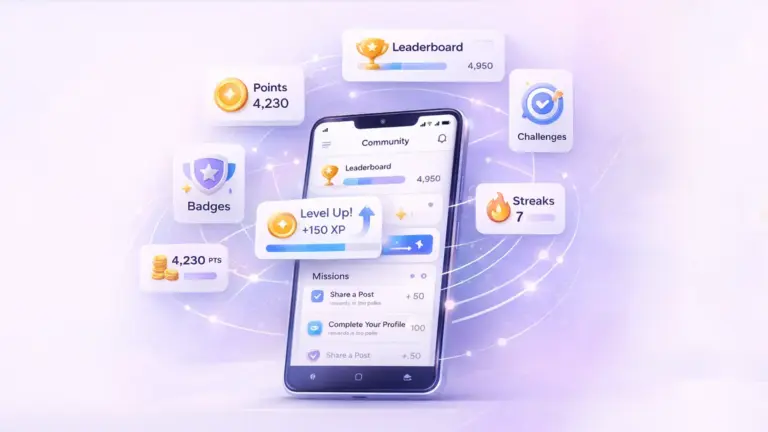
Gamification is the practice of applying game-like elements—such as points, badges, levels, streaks, and leaderboards—to non-game environments. In community platforms, it’s used to increase member activity by encouraging people to complete micro-actions (like reacting to posts), return consistently (via streaks), and level up (through progression systems).
Why is gamification effective for community/member engagement?
Humans are wired to respond to progress, status, and rewards. When your platform surfaces these motivators as visible signals—progress bars, badges, rankings—members feel an ongoing nudge to participate. The result is a system that transforms passive readers into active contributors.
Quick benefits at a glance:
● Motivation: Clear goals and instant feedback keep members engaged.
● Habit-building: Streaks, routines, and micro-rewards build daily momentum.
● Retention: Members who feel progress (and recognition) return more often.
● Community health: Gamification boosts posts, replies, and overall interaction quality.
In this guide, we’ll share gamification tips and tricks, concrete community gamification strategies, examples from well-known platforms, and practical steps to track what’s working. Whether you’re launching a new space or refreshing a mature community, this playbook will help you implement gamification thoughtfully—and sustainably.
What Is Gamification in Member Communities?
1. Definition in simple terms:
Community gamification means turning everyday member actions into a rewarding, trackable, and sometimes competitive experience. It gives members a reason to take action now, and a reason to return later.
2. How it works:
You connect member actions to rewards. When someone posts, comments, reacts, shares, or attends an event, the system grants points, progress, or status. Over time, members unlock levels, badges, or perks that recognize their contributions.
3. Common gamification elements:
● Points: Earned for micro-actions (posting, commenting, reacting).
● Badges: Milestones for meaningful achievements (100 posts, first helpful answer, event organizer).
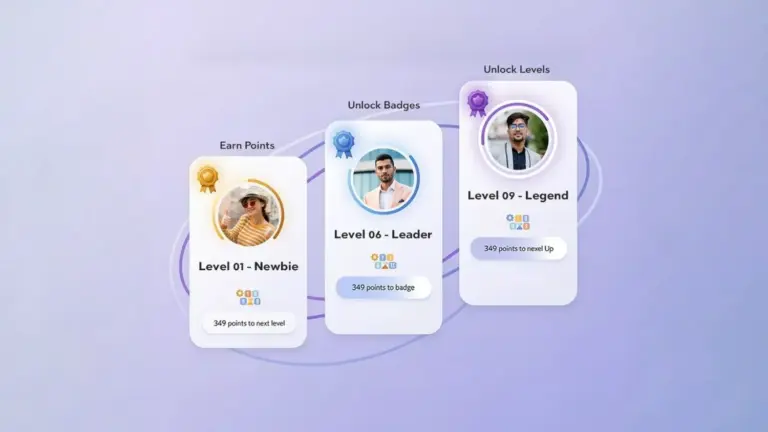
● Levels: Tiered progression that unlocks privileges (e.g., access to advanced groups or tools).
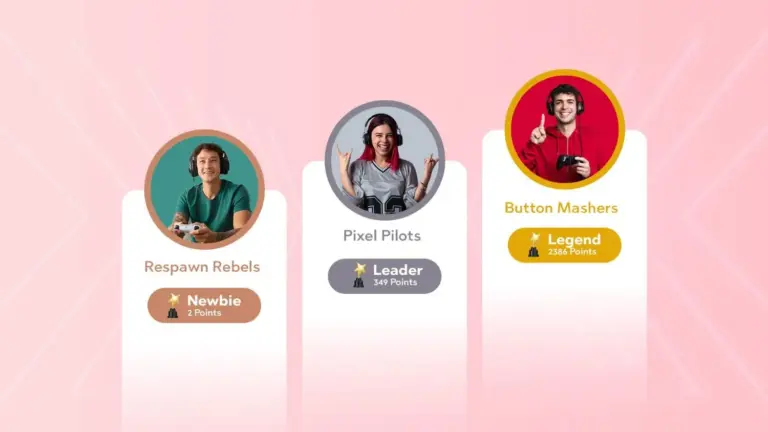
● Leaderboards: Friendly competition across weekly/monthly periods to keep the race fresh.
● Streaks: Daily or weekly activity chains that encourage consistency.
● Challenges/Missions: Time-bound or themed tasks (e.g., “Welcome Week,” “Help a New Member,” “Share 3 resources this month”).
● Reward Store: Redeemable points for digital goodies, profile highlights, or partner perks.
This blend of visible progress, status, and rewards nudges people to become the community’s heartbeat.
Why Gamification Boosts Member Activity
1. Psychological drivers:
● Dopamine & Feedback Loops: Immediate feedback (a pop-up, sound, or animation) when someone earns a badge or completes a challenge provides a mini dopamine hit, reinforcing the action.
● Competition & Social Proof: Leaderboards and public badges spark friendly competition and show what “good” participation looks like.
● Mastery & Achievement: Levels and progress bars make improvement visible, satisfying the human desire to advance.
2. Builds consistency and engagement:
Streaks and time-boxed challenges encourage members to return frequently. When missing a day breaks a streak, people feel a small loss—so they log back in to maintain momentum.
3. Increases platform stickiness:
Members who invest time and effort into achieving status, earning badges, or maintaining streaks become emotionally committed. That personal investment turns your platform into a daily habit.
4. Encourages contribution and participation:
Gamification rewards the helpful behaviors you want to scale: thoughtful posts, insightful comments, event participation, and mentorship. Over time, your content quality rises in tandem with participation.
Best Gamification Strategies to Increase Member Activity
1. Add Points & Badges for Micro-Actions
What to reward:
● Liking/reacting to posts
● Commenting or replying
● Posting helpful content (guides, tutorials, case studies)
● Sharing resources or events
● Marking answers as “accepted” or “helpful.”
● Welcoming newcomers
Why micro-rewards matter:
Micro-rewards provide instant confirmation that actions are valuable. They also lower the barrier to entry for new members. Not everyone will publish a detailed case study on day one—but most will like, react, or leave a short reply. Small wins compound into bigger contributions.
Pro tip: Assign slightly higher points to behaviors you want to drive most (e.g., helpful answers over generic reactions). This avoids gaming the system with low-effort interactions.
2. Use Levels & Progress Bars
Why levels matter:
Levels quantify status. Seeing “Level 3 Contributor” or a progress bar at 75% gives members a clear, motivating goal. It also creates aspirational role models in the community whose behavior others follow.
Unlockable features or perks:
● Access to specialized channels or topic Hubs
● Ability to host events or AMAs
● Profile flair and highlighted posts
● Early access to new features, courses, or templates
Pro tip: Tie levels to trust and responsibility—not just vanity. As people level up, extend moderation capabilities, mentorship roles, or beta access. That deepens their connection to the community’s success.
3. Leaderboards to Encourage Friendly Competition
Implement weekly/monthly leaderboards:
Short time frames keep the race fair and winnable for newcomers. Seasonal or campaign-based boards also add variety.
Community recognition:
● Spotlight top contributors in a monthly roundup.
● Give “Rising Star,” “Helper of the Month,” or “Knowledge Sharer” awards.
● Feature winners on the homepage or newsletter.
Pro tip: Maintain multiple leaderboard categories (e.g., most helpful answers, most welcomes, most shared resources) so different member strengths can shine.
4. Challenges & Activity Missions
Daily/weekly challenges:
●“Reply to 3 posts today.”
● “Share one resource this week.”
● “Attend one live session this month.”
Task-based rewards:
Bundle actions into missions (e.g., “Onboard Hero: complete your profile, introduce yourself, and post your first question”). Completing a mission yields a badge, bonus points, or profile flair.
Event-based missions:
Tie challenges to webinars, product launches, or community festivals. Offer event-limited badges to create urgency and FOMO.
Pro tip: Rotate themes (learning, networking, building, mentoring) so challenges feel fresh and inclusive for different member types.
6. Streaks to Build Daily Habits
Streak types to try:
● Posting streak: Post once per day for N days.
● Learning streak: Complete a lesson, quiz, or resource daily.
● Loyalty streak: Log in or engage (react/comment) daily.
Pro tip: Offer grace periods or “streak freezes” to avoid burnout. Life happens; letting a member preserve a rare 60-day streak with a one-time freeze makes your system feel humane.
6. Reward Store / Redeemable Points
Digital rewards:
● Profile spotlights, custom flair, banner backgrounds
● Access to exclusive templates, guides, or courses
● “Ask an Expert” credits
Perks and coupons:
Redeem points for community swag, partner discounts, or event tickets. A transparent reward store makes the value of participation concrete.
Pro tip: Keep the economy balanced. If rewards are too cheap, you’ll see inflation (and lower perceived value). If they’re too pricey, members give up.
7. Personalized Rewards
AI-based recommendations:
Surface challenges and content that match each member’s interests and skill level. A design learner sees design tasks; a marketer sees campaign-based missions.
Custom badges by interest:
Offer “Topic Specialist” badges (e.g., “No-Code Pro,” “Kubernetes Helper,” “Email Strategy Mentor”) based on consistent contributions in specific tags.
Pro tip: Personalization increases the signal-to-noise ratio. Members engage more when the experience feels tailor-made.
Tips & Tricks for Successful Gamification
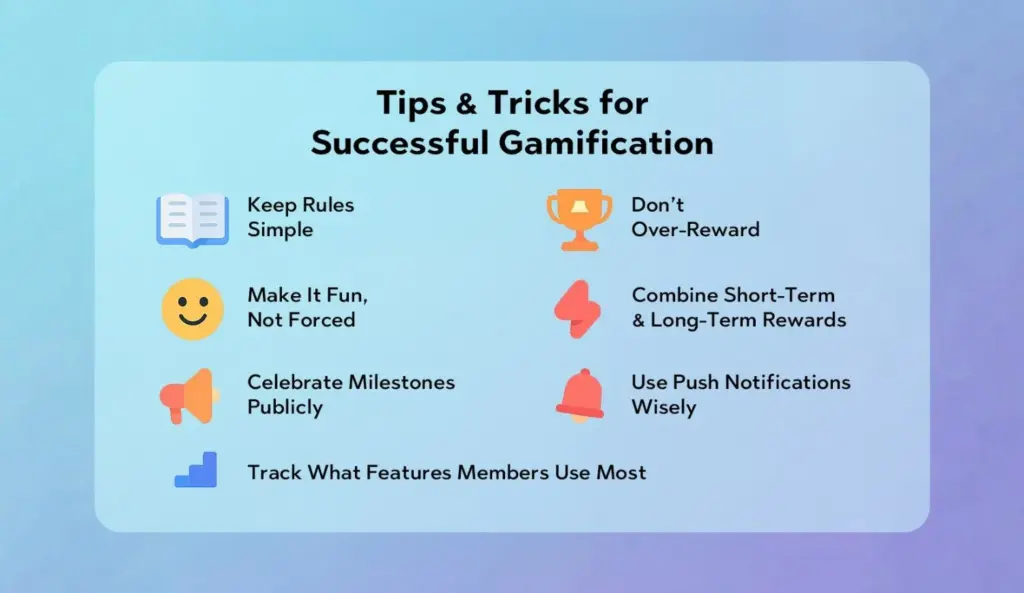
● Keep Rules Simple: If members can’t understand how to earn points or why their level changed, motivation drops. One clear rules page beats three complex ones.
● Don’t Over-Reward: If everything earns points, nothing feels meaningful. Put a spotlight on high-value behaviors (helpful answers, tutorials, peer support).
● Make It Fun, Not Forced: Gamification should feel like a bonus layer, not homework. Avoid nagging. Let members opt into challenges they care about.
● Combine Short-Term & Long-Term Rewards: Pair quick hits (daily challenges) with deeper arcs (leveling, reputation). The mix keeps both new and veteran members engaged.
● Celebrate Milestones Publicly: Announce new badge earners, leveling milestones, or challenge winners in a dedicated “Hall of Fame” thread.
● Use Push Notifications Wisely: Nudge members to complete a streak or continue a challenge—but cap frequency to avoid fatigue.
● Track What Features Members Use Most: Use analytics to see which badges or missions correlate with higher session duration or repeat logins, then double down on those.
Tools & Platforms That Support Gamification
1. Community platforms with built-in gamification:
Many modern community platforms now include points, badges, leaderboards, and streaks out of the box, alongside analytics. When evaluating platforms, look for customizable rules, granular permissions, and automation (e.g., “grant badge when X occurs”).
2. Custom gamification systems:
If you need special mechanics—like domain-specific challenges, complex reward stores, or AI-driven personalization—consider layering a custom rules engine on top of your existing stack via APIs.
3. Mobile-first gamification features:
Push notifications, streak saves, and on-the-go challenges perform especially well on mobile, where members naturally check in multiple times per day.
4. Want to see community-building features in action?
Explore Thrico’s community building tools to see how points, badges, leaderboards, and workflows can slot into your engagement strategy.
Common Mistakes to Avoid
● Overcomplicated Game Mechanics: If members need a tutorial to understand your system, it’s too complex. Trim rules until they’re intuitive.
● Reward Fatigue: Endless badges reduce meaning. Use tiers (Bronze/Silver/Gold) or seasonal badges instead of dozens of similar ones.
● Ignoring User Feedback: Members will tell you which rewards feel valuable and which don’t. Run periodic surveys and adjust.
● One-Size-Fits-All Rewards: Not everyone cares about swag or discounts. Offer experience-based rewards (mentorship sessions, early access) alongside tangible perks.
● Lack of Moderation or Transparency: Ensure leaderboards can’t be exploited by spam. Publish anti-cheat rules and consequences.
How to Measure the Success of Gamification
Don’t fly blind. Tie your gamification plan to measurable outcomes and review them monthly.
1. Core metrics to track:
● Daily Active Members (DAU): Are more members returning each day?
● Post Frequency: Are posts, replies, and reactions trending upward?
● Session Duration: Are members staying longer per visit after you introduced gamification?
● Repeat Logins: What % of users return at least 2–3 times per week?
● Challenge Participation Rate: How many members start and complete challenges? Which challenge types convert best?
● Community Growth & Retention: Are new signups activating (e.g., first post within 7 days)? What’s 30/60/90-day retention post-gamification?
2. Attribution tips:
● Roll out changes in phases or via A/B tests when possible.
● Tag your analytics events clearly (e.g., badge_earned, mission_completed, streak_day_n).
● Watch for quality signals: accepted answers, helpfulness votes, reports, or saved posts—not just raw volume.
Real Examples of Gamification That Work
● Reddit Karma: Users earn karma for upvoted posts and comments. It’s simple, visible, and acts as a proxy for trust.
● Duolingo Streaks: Daily learning streaks and leagues create a powerful habit loop. Streak freezes offer compassion without breaking motivation.
● Discord Roles: Server-specific roles highlight status and grant permissions, turning participation into social capital.
● LinkedIn Profile Strength Bar: A visible progress bar nudges users to complete profiles, improving both discoverability and platform value.
Adding inspiration for your own system:
● Topic Master Badges: Award badges when members hit thresholds in specific tags (e.g., 25 verified answers in “Data Analytics”).
● Community Mentor Track: Recognize members who routinely welcome newcomers or host office hours with “Mentor” status and special flair.
● Seasonal Events: Run quarterly missions with limited-edition badges and a seasonal leaderboard. Resetting periodically keeps competition fresh.
● Impact-Based Rewards: When a member’s tutorial reaches 1,000 views or their answer is marked helpful 10 times, grant a unique “Community Impact” badge with profile highlights for a week.
Conclusion
Thoughtfully implemented, gamification is one of the fastest, most reliable ways to increase member activity and deepen engagement. By rewarding micro-actions, showcasing progress, and creating friendly competition, you tap into core human motivators—achievement, status, consistency, and belonging.
The long-term impact is more than higher numbers. It’s cultural: a community where contributions are recognized, expertise is visible, and newcomers are welcomed into a living, breathing ecosystem. Start small—add points and a handful of badges, test a simple weekly challenge, and introduce a leaderboard. Then iterate based on data and member feedback. Over time, you’ll build community gamification strategies that are both sustainable and uniquely yours.
Ready to explore tooling? Take a look at Thrico’s community building tools to see how gamification and engagement workflows can come together in one place.
Implementation Checklist
Use this quick checklist to move from idea to execution:
- Define outcomes: What behaviors do you want more of? (e.g., helpful answers, event attendance)
- Map actions to rewards: Assign point values and badge criteria to each target behavior.
- Design progression: Choose level thresholds and what each unlocks.
- Plan challenges: Outline one weekly challenge and one monthly mission to start.
- Add streaks with compassion: Include a one-time streak freeze or grace day.
- Create a reward store (optional): Offer a mix of status, digital, and partner perks.
- Integrate analytics: Track DAU, session duration, completion rates, and quality signals.
- Moderation & anti-abuse: Rate-limit low-effort actions and flag suspicious activity.
- Communicate simply: Publish one clear rules page and a monthly recognition post.
- Iterate: Survey your members every quarter; prune, rebalance, and refresh.
Final Note
Gamification isn’t about turning your community into a game—it’s about making meaningful participation feel rewarding and visible. With the right balance of simplicity, recognition, and data-driven iteration, you can transform lurkers into leaders and build a community that sustains itself with energy, generosity, and momentum.
FAQs
Gamification maps valuable member actions to visible progress and rewards. When people see points accrue, badges unlock, or a streak continue, they feel motivated to complete “just one more action.” Over time, those micro-actions compound into consistent posting, replying, and returning.
Start with points and badges for micro-actions, then layer progress bars and levels for long-term progression. Add weekly leaderboards to keep competition fresh and streaks to build daily habits. Tie it all together with challenges/missions that bundle high-value actions into meaningful goals.
Tangible rewards help, but they’re not required. Many communities rely on status rewards (badges, levels, profile flair) and experiential rewards (early access, mentorship opportunities). If you add a reward store, keep it balanced so that points feel valuable and attainable.
Begin with a simple ruleset: define a few micro-actions that earn points, launch 5–8 meaningful badges, and introduce a weekly leaderboard. Add a welcome mission for new members (profile completion + first post + first reply). Track DAU, post frequency, and streak participation for the first month, then iterate.
Common pitfalls include overcomplicated mechanics, reward fatigue, and misaligned incentives (e.g., encouraging low-effort spam). Mitigate these by rewarding quality behaviors more than volume, monitoring analytics, and staying responsive to member feedback.
Yes. Streaks, missions, and progress bars foster habits that keep people coming back. Recognition and status (badges, levels) build emotional investment, which translates to higher 30/60/90-day retention.
Refresh weekly for short-form challenges and seasonally or quarterly for bigger missions and leaderboards. Rotate themes so different member personas have something to get excited about. Archive old challenges in a “Past Events” space to preserve recognition.