The Role of Gamification in Boosting Community Engagement
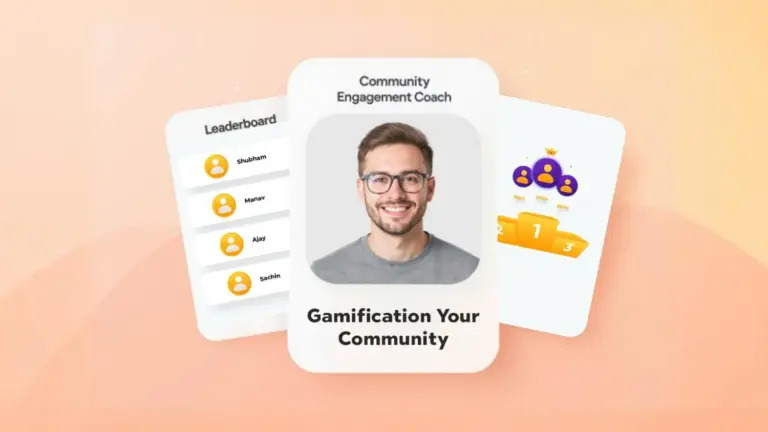
Communities thrive on participation. Whether you’re building a member forum, a customer hub, an online learning space, or a creator-led group, the central challenge is the same: how do you keep people coming back, contributing, and caring? One of the most effective answers today is gamification in community engagement—the strategic use of game mechanics to nudge, reward, and celebrate the actions that make your community stronger.
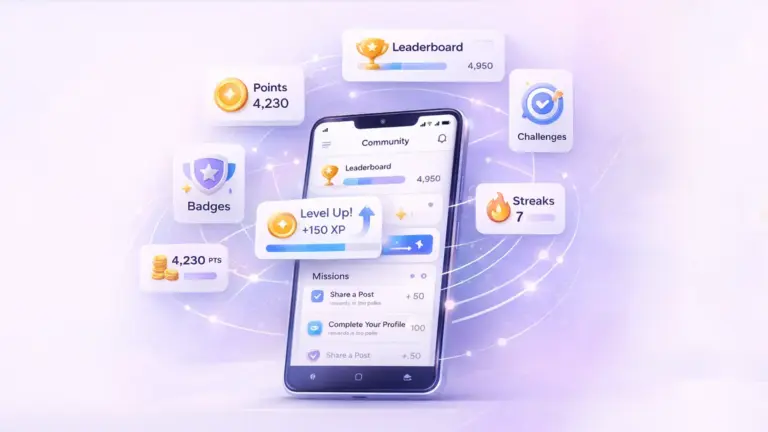
But gamification isn’t about turning your community into an actual game. It’s about selectively using proven motivators—points, badges, leaderboards, challenges, streaks, levels, and rewards—to shape behavior in ways that feel natural and fun. When done right, the role of gamification is to make participation feel meaningful, visible, and satisfying. When done poorly, it can create noise, vanity metrics, or even unhealthy competition.
This guide dives deep into the community engagement gamification playbook: what it is, why it matters, which gamification features for communities work best, how to implement them, and the pitfalls to avoid. You’ll also find practical examples, best practices, and a comprehensive FAQ to help you build a thoughtful, sustainable engagement system—ideally supported by community building tools like those offered at Thrico.
What Is Gamification?
At its core, gamification is about applying game mechanics in non-game platforms to encourage specific behaviors. In community settings, that means using mechanisms like points, levels, badges, and progress indicators to make everyday interactions feel rewarding.
- Applying game mechanics in non-game platforms: You’re not building a game; you’re weaving game elements into posts, comments, events, learning paths, and feedback loops.
- Motivates users to complete actions: Members are more likely to post, react, share, and help when they know those actions matter—and are recognized.
- Increases activity and user retention: Over time, small motivational nudges add up to higher session frequency, longer time-on-site, and stronger identity within the community.
Gamification reframes routine behaviors as achievements on a journey. That shift—from “just posting” to “progressing and earning”—is where the magic happens.
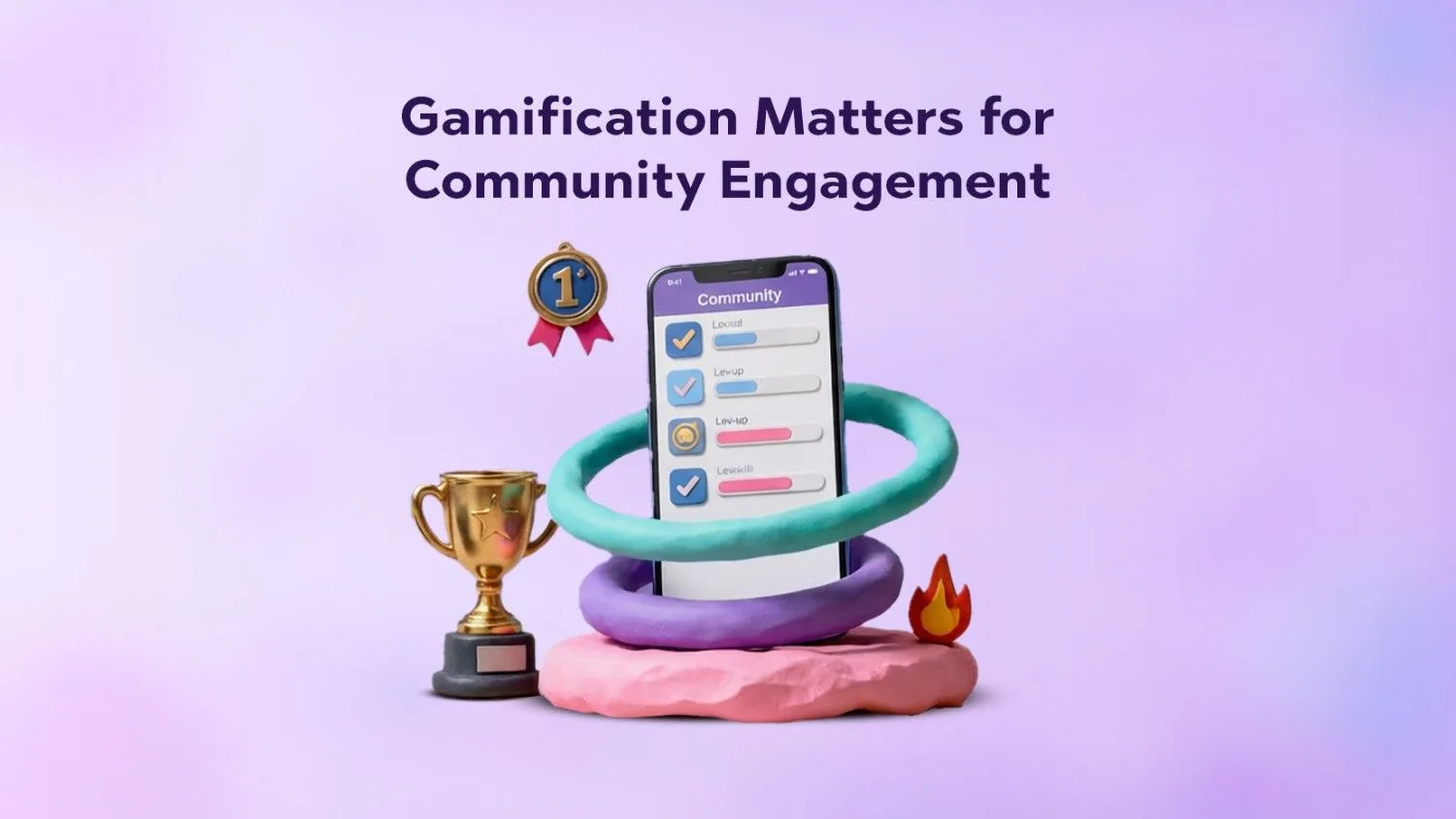
Why Gamification Matters for Community Engagement
1. Makes participation fun
Even small playful elements—custom badges, celebratory animations, progress meters—can make routine actions feel rewarding. Fun shouldn’t be underestimated; delight changes habits.
2. Encourages users to contribute more
People enjoy seeing their impact. Points and visible milestones help members understand what “good participation” looks like and encourage them to do more of it.
3. Creates healthy competition
Leaderboards and seasonal challenges (e.g., weekly or monthly) can spark friendly rivalries—especially when combined with team formats or themed events.
4. Builds long-term loyalty
Progression systems (levels, titles, unlockable perks) give members a reason to stay active across weeks and months. When you invest in your profile, you’re more likely to return.
5. Enhances user satisfaction
Recognition is a powerful driver of satisfaction. Earning a badge for helpful answers or hitting a contribution streak feels good and builds positive associations with your brand.
Key Gamification Elements that Boost Engagement
Not all gamification is equal. These gamification features for communities consistently produce the strongest results when implemented thoughtfully:
1. Points & Rewards
- What they are: Numeric values earned for actions like posting, commenting, sharing resources, attending events, answering questions, or inviting friends.
- Why they matter: Points create a clear currency of effort. They also enable flexible incentives: members can spend points on perks, or you can use thresholds to unlock levels.
- Best practice: Reward high-quality actions more than high-quantity spam. For example, a helpful answer verified by the community should be worth more than a simple emoji reaction.
2. Badges & Achievements
- What they are: Visual markers representing milestones (e.g., “First Post,” “Top Contributor,” “Community Mentor,” “100 Helpful Answers,” “Event Champion”).
- Why they matter: Badges boost profile value, status, and pride. They also help new members recognize who’s trusted or specialized.
- Best practice: Combine role-based badges (moderator, expert) with achievement badges to highlight both responsibility and accomplishment.
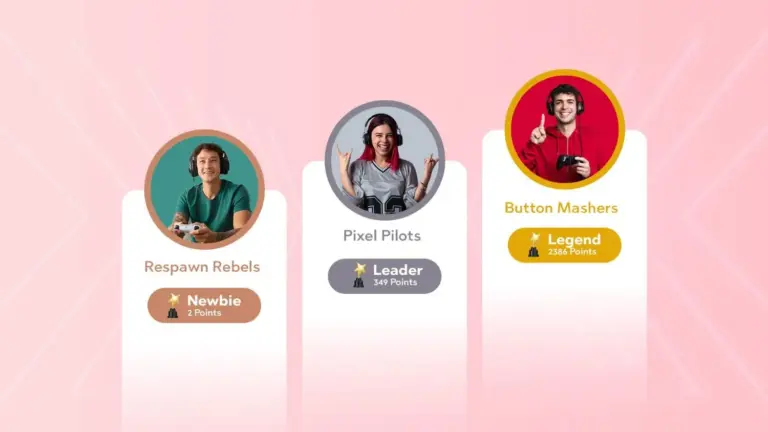
3. Leaderboards
- What they are: Ranked lists showing top contributors over a set period—daily, weekly, monthly, or seasonal.
- Why they matter: Visibility breeds motivation. Public recognition motivates friendly competition and raises the bar for quality.
- Best practice: Reset frequently (e.g., weekly or monthly) to give newcomers a chance to shine and prevent incumbents from dominating indefinitely.
4. Levels & Progression
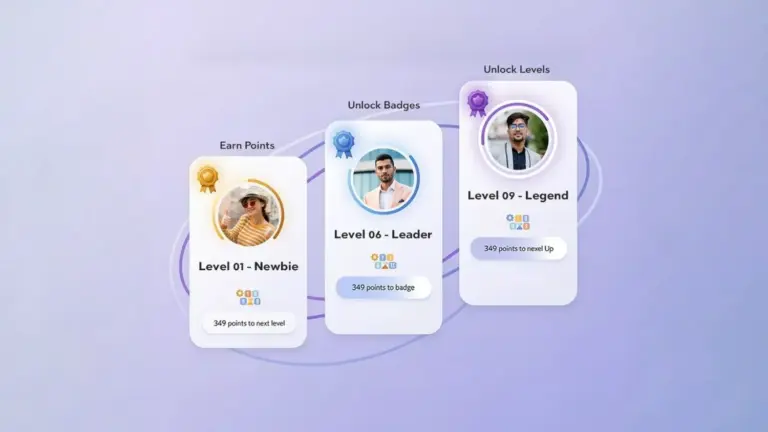
- What they are: Tiered stages (e.g., Bronze → Silver → Gold → Platinum) that members reach by accumulating points or completing milestones.
- Why they matter: Levels signal growth and mastery. They can also unlock privileges (e.g., access to exclusive channels, beta features, or event discounts).
- Best practice: Keep the first few levels easy to reach (to hook behavior), then increase difficulty to sustain long-term engagement.
5. Daily/Weekly Challenges
- What they are: Time-boxed tasks like “Post your best tip this week,” “Answer 3 questions today,” “Join Friday’s AMA,” or “Complete a 5-day comment streak.”
- Why they matter: Regular cadences shape habits. Short-term goals help members return and participate consistently.
- Best practice: Align challenges with community goals (knowledge sharing, feedback collection, product discovery) and vary the themes to reduce repetition.
6. Virtual Gifts & Kudos
- What they are: Peer-to-peer tokens of appreciation (kudos, hearts, virtual gifts) that highlight high-quality posts or helpful behavior.
- Why they matter: Recognition from peers is deeply motivating and builds social bonds. A kudos economy can be more meaningful than points alone.
- Best practice: Allow members to gift limited kudos per week to maintain their value and reduce inflation.
7. Streaks & Completion Bars
- What they are: Visual indicators of consistent activity (“You’ve posted 7 days in a row!”) and progress meters that show how close a member is to finishing a task or leveling up.
- Why they matter: Once a streak starts, people work hard not to break it. Progress bars convert abstract goals into tangible momentum.
- Best practice: Offer gentle recovery options (e.g., “use a pass to save your streak”) to reduce frustration from unavoidable misses
How Gamification Improves Community Engagement
1. Encourages user-generated content (UGC)
Clear incentives tell members exactly what’s valued—tutorials, case studies, thoughtful comments, helpful answers—and reward them accordingly. Over time, this yields a self-sustaining UGC flywheel.
2. Improves retention through continuous motivation
Levels, streaks, and seasonal challenges create recurring reasons to return. Members stick around to protect streaks, finish challenges, or reach the next milestone.
3. Builds competitiveness and excitement
Friendly competition via leaderboards and team challenges energizes the community. Recognition ceremonies (e.g., monthly shoutouts) add fanfare and deepen social ties.
4. Increases participation in discussions, polls, and feedback
Design challenges around current community goals—product feedback week, learning sprint, or expert Q&A season—to crowdsource insights while making participation fun.
5. Strengthens the overall community experience
Gamification creates a shared language of progress and appreciation. When members see their contributions celebrated and their growth visualized, they feel seen, valued, and connected.
Examples of Gamification in Communities
- Reddit karma system: Upvotes translate to karma, signaling contribution quality and reputation.
- Duolingo streaks: Daily practice streaks, XP, and leaderboards keep learners consistent and engaged.
- Thrico: Community platforms can embed points, badges, challenges, and leaderboards to accelerate member activity—powered by community building tools like those available at Thrico Features.
- LinkedIn profile strength meter: A visible progress indicator nudges users to complete profiles.
- Fitness apps with badges: Milestone badges and streaks turn consistent workouts into a rewarding journey.
- Online learning communities with points & certificates: Structured pathways, assessments, and certifications reinforce progress and expertise.
These examples demonstrate a range of mechanics that can be adapted for any community’s goals.
Best Practices for Adding Gamification
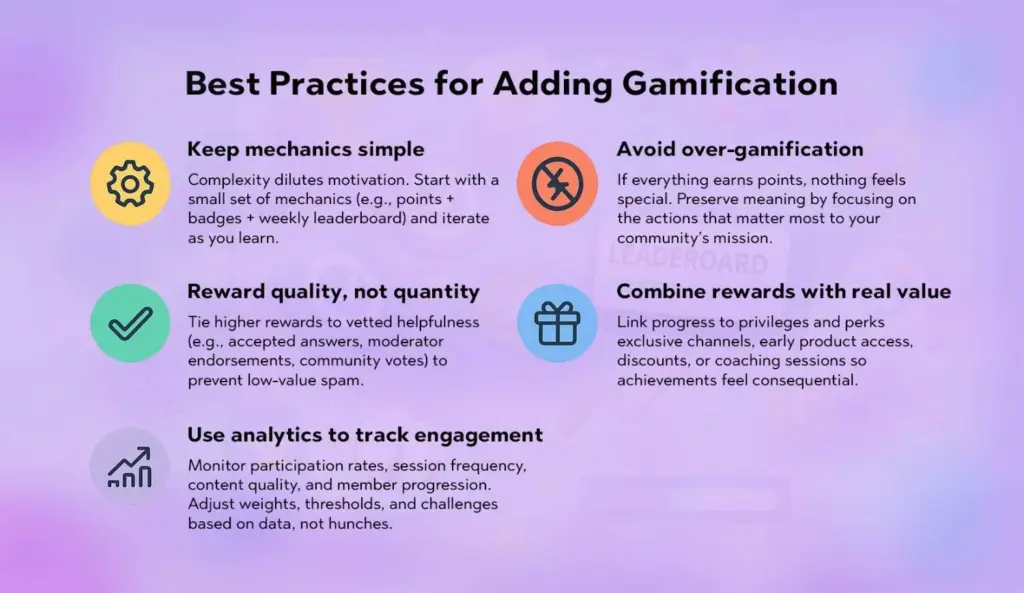
1. Keep mechanics simple
Complexity dilutes motivation. Start with a small set of mechanics (e.g., points + badges + weekly leaderboard) and iterate as you learn.
2. Avoid over-gamification
If everything earns points, nothing feels special. Preserve meaning by focusing on the actions that matter most to your community’s mission.
3. Reward quality, not quantity
Tie higher rewards to vetted helpfulness (e.g., accepted answers, moderator endorsements, community votes) to prevent low-value spam.
4. Combine rewards with real value
Link progress to privileges and perks—exclusive channels, early product access, discounts, or coaching sessions—so achievements feel consequential.
5. Use analytics to track engagement
Monitor participation rates, session frequency, content quality, and member progression. Adjust weights, thresholds, and challenges based on data, not hunches.
For an integrated approach, look for community-building tools that make it easy to configure points, badges, levels, and challenges in one place. Explore what’s possible with Thrico’s features.
Common Mistakes to Avoid
1. Giving too many meaningless badges
If badges are too easy or too frequent, they lose prestige. Curate a tiered, thoughtfully named set that tells a story of growth.
2. Creating unfair competition
Leaderboards that never reset or that favor early adopters can discourage newcomers. Use time-bound boards and rotating categories to keep things fair.
3. Not updating challenges regularly
Stale challenges lead to disengagement. Refresh themes, rotate formats (solo vs. team), and align with seasonal community priorities.
4. Lack of reward diversity
Not everyone is motivated by the same rewards. Mix status-based recognition, practical perks, and social appreciation.
5. Ignoring user feedback
Members will tell you what feels meaningful and what feels like noise. Listen, iterate, and show your work (“We rebalanced points based on your feedback.”).
Building a Gamification Strategy: A Step-by-Step Playbook
- Define your north-star outcomes. Do you want more quality answers, richer tutorials, higher event attendance, or better onboarding completion? Pick 2–3 metrics that matter.
- Map community actions to outcomes. List the behaviors that lead to your outcomes: posting solutions, mentoring newcomers, sharing case studies, and submitting product feedback.
- Assign point values based on impact. A helpful answer verified by peers might be worth 10× a simple like. Encourage what moves the needle.
- Design a clear progression path. Define levels (e.g., Explorer → Guide → Mentor → Champion), the thresholds for each, and the perks unlocked at every step.
- Create a badge taxonomy. Mix foundational badges (first post, first reply), mastery badges (100 verified answers), and seasonal or campaign badges (Hackathon Hero).
- Launch time-boxed challenges. Start with weekly or monthly challenges tied to your current goals—e.g., “Welcome Week,” “How-To November,” “Feedback Sprint.”
- Add social recognition. Instituting kudos, shoutouts, and “Member of the Month” recognition magnifies the impact of points and badges.
- Pilot with a cohort. Test with a small group, gather feedback, and adjust rewards and thresholds to feel fair and motivating.
- Measure and iterate. Track participation, quality signals, and retention. Tune your system quarterly to keep it fresh and effective.
- Automate with the right tools. Adopt a platform with configurable points, badges, leaderboards, and analytics. See what you can do with Thrico’s community-building tools.
Designing Rewards That Actually Motivate
A reward is only as powerful as the story it tells. Consider a layered approach:
- Status rewards: Visible titles, profile frames, limited-edition badges.
- Access rewards: Private groups, early feature access, VIP AMAs, beta programs.
- Utility rewards: Discounts, credits, templates, priority support, and coaching.
- Social rewards: Public shoutouts, spotlights, case study features, team captain roles.
Pair each reward with a clear narrative—why the member earned it and what it says about their contribution. For example, a “Community Mentor” badge isn’t just a graphic; it’s recognition of consistent, high-quality support for others.
Balancing Intrinsic and Extrinsic Motivation
Gamification leans on extrinsic motivators (points, badges, rewards), but long-term engagement depends on intrinsic motivators—purpose, mastery, autonomy, and belonging. Your design should:
- Highlight purpose: Tie challenges to the community’s mission so contributions feel meaningful.
- Celebrate mastery: Use levels and skill-based badges to recognize expertise and growth.
- Promote autonomy: Let members choose from multiple challenge tracks (e.g., teaching, creating, organizing).
- Strengthen belonging: Encourage peer recognition (kudos) and team-based goals to create shared wins.
When extrinsic and intrinsic elements reinforce each other, you get durable engagement—not just short-lived spikes.
Accessibility and Inclusivity in Gamification
Engagement should be for everyone. Consider:
- Multiple paths to earn: Reward different kinds of contributions (writing, moderating, mentoring, organizing events, creating resources).
- Fairness and anti-abuse: Use rate limits, moderation signals, and reputation checks to prevent gaming the system.
- Clear language and visuals: Ensure badges and prompts are understandable, with alt text for images and descriptive labels for progress indicators.
- Time-zone sensitivity: Run challenges long enough to include global members; announce start/end times with precise dates and time zones.
- On-ramps for newcomers: Offer beginner quests to help new members learn the ropes quickly.
Inclusivity isn’t just ethical; it also expands your contributor base and builds a resilient culture.
Measurement: Knowing What Works
To ensure your community engagement gamification efforts are creating real value, track metrics across four dimensions:
- Activation
- New member participation rate
- Time to first post/comment
- Onboarding quest completion
- New member participation rate
- Engagement
- Weekly active contributors (not just readers)
- Average posts/comments per active member
- Challenge participation rates
- Weekly active contributors (not just readers)
- Quality
- Ratio of accepted/endorsed answers
- Peer kudos per post
- Moderator review outcomes
- Ratio of accepted/endorsed answers
- Retention & Growth
- 4-week and 12-week contributor retention
- Streak continuity statistics
- Referral and invite conversions
- 4-week and 12-week contributor retention
Use these insights to rebalance points, re-theme challenges, and re-prioritize rewards. A data-informed loop is the difference between a one-off campaign and a sustainable engagement engine.
Launch Checklist

- Define outcomes and core actions
- Map points to impact, not volume
- Create a level ladder with clear perks
- Design a badge set that tells a story
- Implement weekly/monthly leaderboards
- Add kudos and social recognition
- Plan a 30–60 day challenge calendar
- Configure analytics dashboards
- Pilot with a small group, then roll out
- Celebrate publicly and iterate quarterly
Need a streamlined way to launch all of the above? ExploreThrico’s community-building tools.
Putting It All Together
Gamification isn’t a gimmick; it’s a structured way to reward what matters. The role of gamification in thriving communities is to translate your values into visible signals—so members know what to do, why it matters, and how their efforts add up. With points that prioritize quality, badges that recognize real milestones, leaderboards that reset to keep things fair, levels that unlock meaningful perks, challenges that create exciting rhythms, and streaks that build habits, you can create an environment where contribution feels natural—and delightful.
If you’re ready to design or upgrade your system, consider powering your approach with community building tools that streamline configuration, analytics, and iteration. You can explore what’s possible with Thrico’s features.
FAQs
Gamification provides clear goals, visible progress, and meaningful rewards, which make participation feel purposeful and fun. Members see the value of their contributions through points, badges, and recognition, and they return to maintain streaks, climb leaderboards, and unlock new levels.
The winning combo typically includes points, badges, levels, leaderboards, streaks, and time-boxed challenges. Layer in peer recognition (kudos) and access-based rewards to deepen motivation.
Yes—badges validate milestones and expertise, while leaderboards create friendly competition and social visibility. To keep things fair, reset leaderboards regularly and ensure badges aren’t handed out too easily.
Streaks harness a powerful human tendency: once we’ve built momentum, we don’t want to lose it. By visualizing consecutive days or weeks of activity, streaks encourage consistent participation and habit formation.
Challenges give members short-term, achievable goals tied to a theme or outcome. They create urgency (“Join this week!”), variety (new themes), and community buzz (public shoutouts to participants and winners).
Points quantify contribution; levels tell the story of progress. Together, they reinforce “I am growing here,” which encourages long-term loyalty and deepens identity within the community.
Most communities can benefit, but the design should fit the context. For example, professional groups might emphasize expert badges and quality signals, while hobbyist communities might lean into streaks and creative challenges.
A layered system works best: status (titles, frames), access (private groups, AMAs), utility (discounts, templates), and social (spotlights, kudos). Pick rewards that align with your community’s values and your organization’s goals.
Measure activation, engagement, quality, and retention. For example: first-week contribution rates, accepted answers, streak statistics, and 12-week contributor retention. Use these insights to rebalance your mechanics.
Overuse can lead to vanity metrics, spammy behavior, unfair advantage, and fatigue. Keep mechanics focused, reward quality, rotate challenges, and take member feedback seriously.