Benefits of Points, Badges, Levels, and Engagement Loops
Points, badges, levels, and engagement loops are the building blocks of thoughtful gamification. Used well, they motivate participation, make progress feel visible, and help communities turn casual visitors into long-term contributors. This guide distills how each element works, why it matters, and how to combine them into an effective, sustainable system—grounded in Thrico’s approach to modern community engagement.
What Are Points, Badges, Levels, and Engagement Loops?
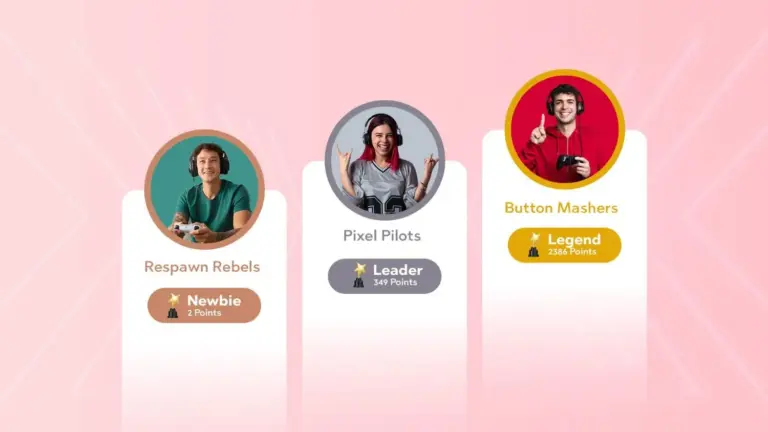
Points are the basic “currency” members earn for valuable actions—posting, replying, sharing resources, attending events, inviting peers, or completing learning paths. Thoughtful point systems weigh high-impact behaviors (like verified helpful answers) more than low-effort actions to encourage quality over quantity. (Thrico)
Badges are visible markers of achievement and identity—“First Post,” “Top Contributor,” “Community Mentor,” or campaign-themed awards. They signal expertise, reward milestones, and help newcomers quickly recognize trusted members.
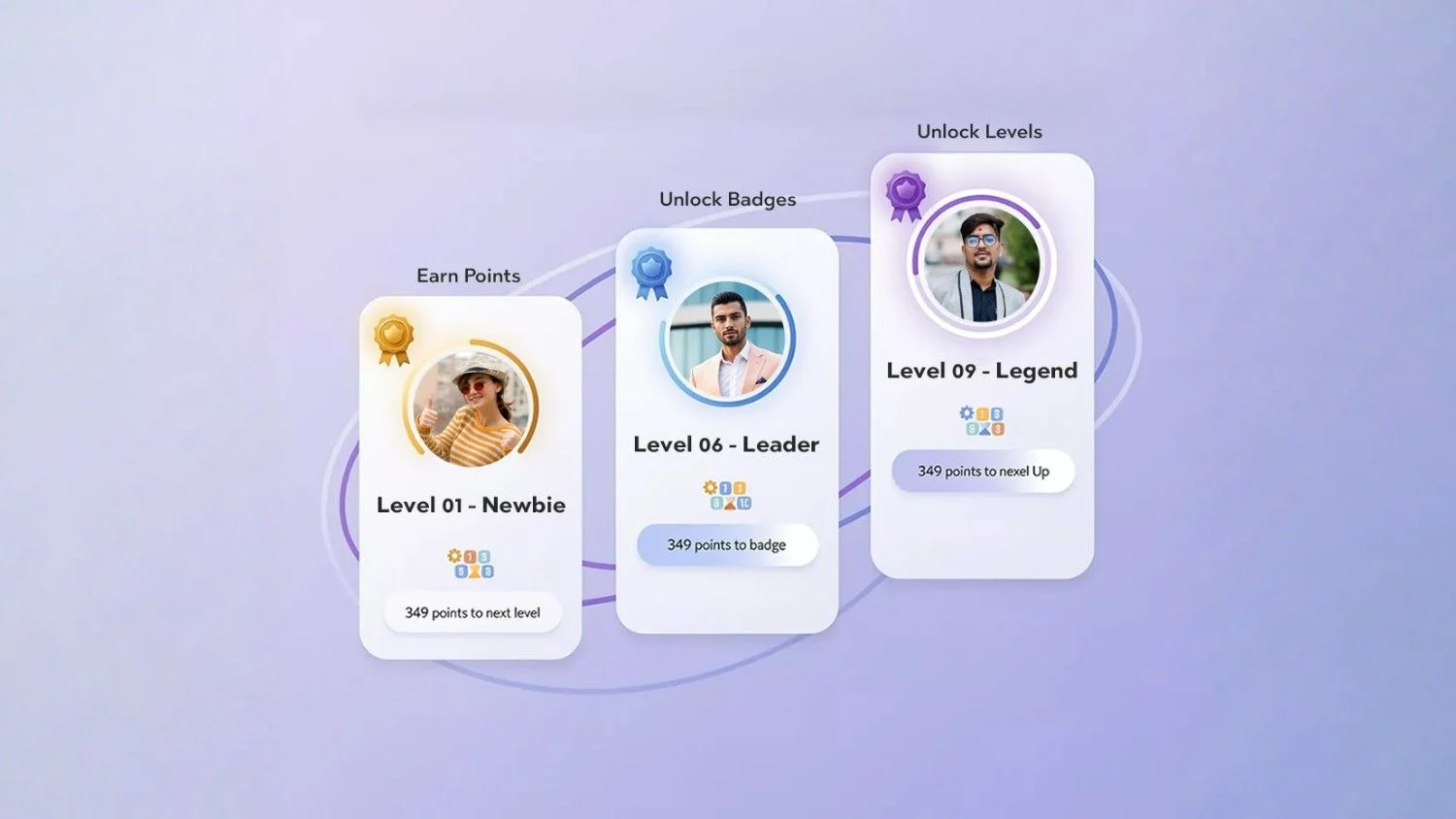
Levels (or progression tiers such as Bronze → Silver → Gold → Platinum) show cumulative growth. They unlock privileges and perks—access to private groups, beta features, or event discounts—so members have tangible reasons to keep participating over weeks and months.
Engagement loops are the repeatable cycles that create habits: a member takes an action, receives timely feedback (points, progress bars, kudos, or a badge), and is prompted toward the next meaningful action. Loops are reinforced with streaks, weekly challenges, or seasonal leaderboards to keep momentum fresh.
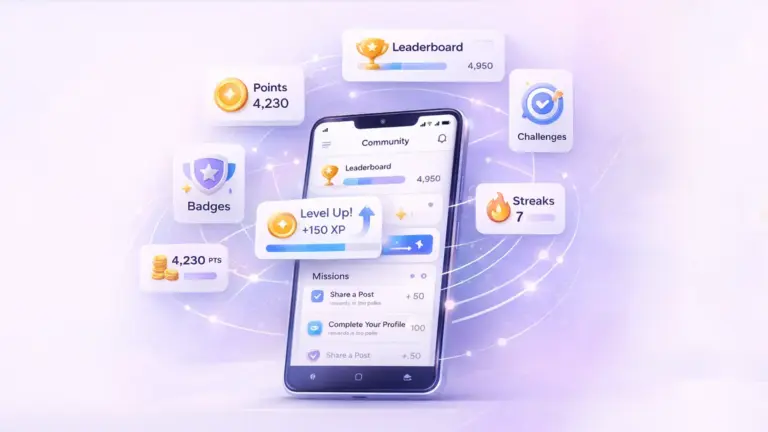
Together, these elements form a simple pattern: clear actions → instant feedback → visible progress → meaningful rewards. When combined in a community platform like Thrico, they transform routine participation into a motivating journey that sustains retention.
Benefits of Points
1) Motivation through reward accumulation
Points translate effort into an immediately understandable signal: your contributions matter. Members who see points accrue after helpful actions are more likely to continue those behaviors. Aligning point values with your community’s goals (for example, rewarding accepted answers more than quick reactions) nudges quality participation without adding friction.
2) Tracking progress and achievements
Points make progress concrete. They power completion bars, thresholds to unlock levels, and eligibility for seasonal spotlights. Over time, consistently earned points correlate with stronger session frequency and return visits—because members can see their advancement and the next milestone.
Internal link (Gamification basics): Explore how Thrico’s Modules & Features bring engagement mechanics like points and progression into one unified platform: https://thrico.com/modules-and-features/.
Benefits of Badges
1) Social recognition and status
Badges make identity visible. Whether you highlight role-based badges (moderator, expert) or achievement badges (100 helpful answers, event champion), the effect is the same: members feel seen and valued. Public recognition also helps others discover who to learn from or ask for help, improving the quality of peer-to-peer interactions.
2) Encouraging consistent participation
A well-curated badge taxonomy tells a story of growth: foundational milestones early on, mastery badges for deeper contributions, and seasonal or campaign badges to keep things lively. When members know the next badge is within reach, they’re more likely to keep showing up and contributing.
Related reading: The Role of Gamification in Boosting Community Engagement explains why badges, titles, and visible achievement design increase motivation while avoiding vanity metrics. Read it here.
Benefits of Levels
1) Providing clear milestones for users
Levels offer an easy-to-understand roadmap—what you’ve earned and what’s next. Early levels should be quick to reach (to “hook” the behavior), while later tiers require more significant contributions. That cadence creates a satisfying rhythm of wins that keeps people moving forward.
2) Encouraging long-term engagement and retention
Levels shine when they unlock meaningful perks—exclusive spaces, early access, discounts, or responsibilities like mentoring. The result is a virtuous cycle: the more a member participates, the more value (and identity) they unlock, and the more invested they become in returning.
Related reading: Practical implementation tips for levels, streaks, and time-boxed challenges are covered in Using Gamification to Increase Member Activity: Tips & Tricks. Read it here.
Benefits of Engagement Loops
1) Creating habitual actions through feedback loops
Engagement loops turn sporadic actions into habits. When every valuable action earns immediate feedback—points, kudos, a progress nudge—members experience momentum. Streaks and weekly challenges add cadence, while progress meters visualize the “next step,” keeping the loop alive.
2) Increasing repeat visits and user retention
Loops work because they provide recurring reasons to return: protect your streak, finish the challenge, reach the next level, or appear on the weekly leaderboard. Communities that combine these mechanisms see stronger participation in discussions, events, and feedback campaigns.
Related reading: For examples of challenges, streaks, and leaderboards that drive repeat behavior—along with pitfalls to avoid—see The Role of Gamification in Boosting Community Engagement.
Combining Points, Badges, Levels, and Engagement Loops
Isolated mechanics can help, but the real gains appear when you layer them:
● Points fuel levels (thresholds) and badges (milestones).
● Badges and titles amplify status and guide trust discovery (who’s credible).
● Levels tie to perks that matter—exclusive channels, early access, discounts.
● Engagement loops (streaks, weekly challenges, seasonal leaderboards) provide recurring prompts that keep the system lively without overwhelming members.
In practice, communities use these combinations to:
● Accelerate user-generated content (UGC) by mapping higher point values to helpful posts, verified answers, or detailed tutorials—then celebrating achievements with profile-level badges.
● Boost event participation by running time-boxed challenges tied to live AMAs or webinars, awarding badges and level progress for attendance and recaps.
● Strengthen onboarding with early, easy wins (first-post badge, “Welcome Week” challenge) followed by a visible path to deeper contribution.
When your platform centralizes these tools—like Thrico’s unified modules and features—it becomes far simpler to configure rewards, track outcomes, and iterate. Explore Thrico Modules & Features.
Best Practices for Using Gamification Elements
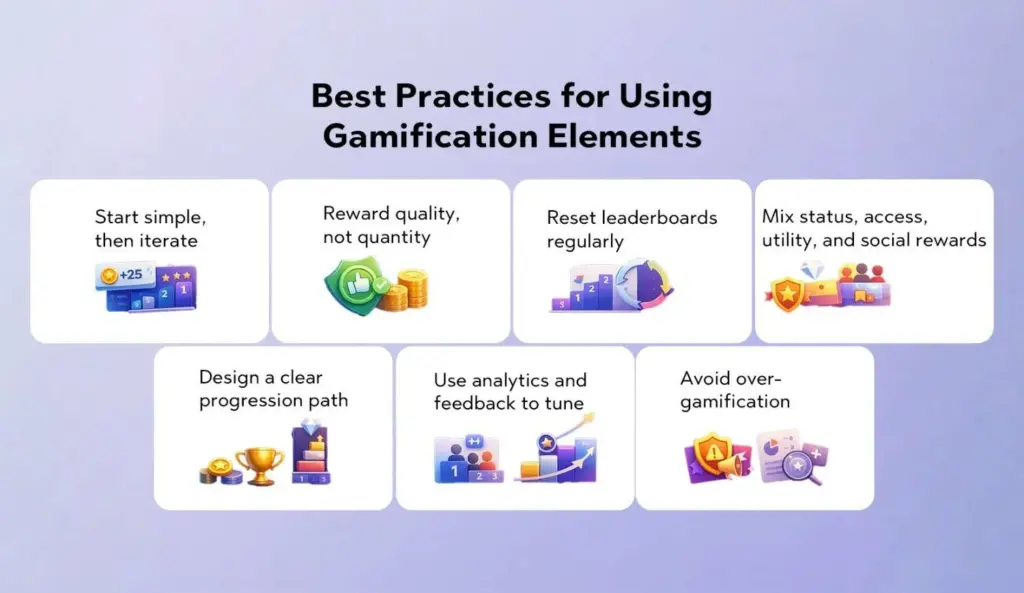
1. Start simple, then iterate
Launch with a minimal set—points + badges + a weekly leaderboard. Watch how members respond, then layer in levels, streaks, or challenges based on real engagement data. Complexity dilutes motivation.
2. Reward quality, not quantity
Tie the higher point values to peer-validated helpfulness, accepted answers, or moderator endorsements. This reduces spammy behavior and teaches what “good participation” looks like.
3. Reset leaderboards regularly
Use weekly or monthly cycles. Rotating categories and time-bound boards prevent incumbents from dominating forever and give newcomers a fair shot.
4. Mix status, access, utility, and social rewards
Not everyone is motivated by the same thing. Combine visible status (titles, frames) with access (private groups, early features), utility (discounts, templates), and social rewards (public shoutouts).
5. Design a clear progression path
Name levels meaningfully (Explorer → Guide → Mentor → Champion). Keep the first tiers easy; increase difficulty later to sustain long-term engagement. Connect each level to concrete perks.
6. Use analytics and feedback to tune
Track participation rates, streak preservation, challenge completion, and content quality. Share re-balances transparently (“We increased points for accepted answers based on your feedback.”).
7. Avoid over-gamification
If everything earns points, nothing feels special. Focus mechanics on the behaviors that matter most to your community’s mission. Keep themes fresh and avoid badge inflation.
For tactical ideas you can implement right away, see Thrico’s playbooks on gamification and community engagement:
● Using Gamification to Increase Member Activity: Tips & Tricks (streaks, weekly prompts, reward mixes).
● The Role of Gamification in Boosting Community Engagement (mechanics, pitfalls, and program design).
Where to Go Next
● See what’s possible with Thrico’s modules and features—from gamification to discussions, events, and more—so you can design a cohesive engagement system in one place:https://thrico.com/modules-and-features/.
● Deep-dive into practical tactics with Thrico’s latest gamification guides:
○ The Role of Gamification in Boosting Community Engagement (mechanics, examples, pitfalls).
○ Using Gamification to Increase Member Activity: Tips & Tricks (weekly challenges, streaks, reward design).
Design your system with intention and keep it human. The right blend of points, badges, levels, and engagement loops will turn everyday actions into a meaningful journey—one that members are proud to repeat and grow with over time.
FAQs
They’re the core mechanics behind a motivating community experience. Points reward valuable actions, badges make achievements and roles visible, levels show cumulative growth and unlock perks, and engagement loops (streaks, weekly challenges, leaderboards) provide recurring prompts that shape habits.
Points make an impact visible and immediate. When members see points accrue—especially for high-value behaviors—they’re more likely to repeat them, advance toward the next level, and return to protect streaks or complete challenges.
Badges provide identity, status, and social proof. They help members feel recognized and help others find credible contributors, ultimately raising the quality of discussion and collaboration.
Levels turn participation into a journey. When each tier unlocks meaningful perks (exclusive channels, early access, discounts), members have clear reasons to keep coming back over weeks and months.
Loops are repeatable cycles: action → feedback → next prompt. Timely feedback from points, progress bars, kudos, or badges encourages another action; streaks and weekly challenges add cadence that builds habits.
Use points to power levels and badges; use levels to unlock perks; use loops (streaks, weekly challenges, seasonal leaderboards) to keep momentum. Start small, measure, and iterate quarterly.
Keep mechanics simple, reward quality, reset leaderboards regularly, diversify rewards (status, access, utility, social), and tune with data and member feedback. Avoid over-gamification and badge inflation.
Yes. When designed thoughtfully, gamification increases session frequency, time-on-site, and members’ sense of belonging—key drivers of retention and loyalty in thriving communities.
A layered mix works best: status (titles, frames), access (private groups, early features), utility (discounts, credits), and social recognition (public shoutouts). Map rewards to your members’ motivations.
Yes—over-complexity, unfair competition (never-reset leaderboards), meaningless badge inflation, and incentives that prioritize quantity over quality. Keep mechanics focused, fair, and aligned to your mission—and adjust based on member feedback.