
How Alumni Networks Changed: From Static Directories to Living Communities
Most institutions have an alumni database that is accurate for the graduating class and progressively wrong for every year before it.
That is not an administrative failing. It is the predictable outcome of a model designed to store records rather than keep relationships current, and it has survived three technology changes largely intact. The directory became a database, the database got a login, the login got a mobile view, and the underlying problem stayed where it was.
What changed recently is not the storage. It is who does the updating, and whether alumni have any reason to.
From Static Alumni Directories to Digital Networks
Alumni networks moved through four stages. Each solved the previous stage’s cost problem and inherited its engagement problem, which is why institutions can arrive at modern software and find participation has not moved.
| Stage | What it stored | Who produced | Why alumni engaged | What decayed |
| Printed directory | Names and addresses | Institution | To find someone specific | Accuracy, immediately |
| Digital database | Segmented records | Institution | Email received | Attention |
| Login portal | Records plus self-service | Institution | Reunions and job searches | Visits between events |
| Two-way network | Records, activity, connections | Alumni and institution | Other alumni | Least, if activity continues |
The sequence is worth walking, because it explains what current tools are actually for.
The Traditional Alumni Directory Model
Picture the object itself. A bound volume, printed every few years, listing names, graduation years, professions and addresses, mailed to alumni who had paid or given. Obsolete the week it arrived and genuinely useful anyway, because for decades it was the only way one graduate could find another.
Its economics dictated its behaviour. Printing cost enough to justify only occasional editions, so updates were collected in bursts through mailed forms, and the accuracy of the whole thing rested on alumni volunteering changes to an institution they had no ongoing contact with.
The model also fixed the direction of the relationship. The institution held the record, the institution published, the alumnus received. Nothing in the design allowed for anything else.
Did you know: The three-way split most engagement teams still use, between owned, earned and paid channels, was formalised in a Forrester report by Sean Corcoran published on 16 December 2009. Printed alumni directories were the original owned channel, with the same defining property as a modern community platform: the institution controlled distribution and held the records.
The Shift to Digital Alumni Databases
- What the directory was: A periodic snapshot, expensive to produce, updated in batches, distributed to everyone at once.
- What the database became: A continuously revisable record, searchable and segmentable, with a marginal contact cost of effectively zero.
Alumni network management turned from a publishing discipline into a data one. An institution could now address graduates by year, region, industry or giving history, and treat each differently.
The trap was that zero marginal cost changed institutional behaviour before it changed alumni behaviour. Contact frequency rose sharply because it could. The relationship stayed one-way and simply carried more volume in the same direction.
Digitisation also moved a question that print had settled. A printed directory was unambiguously the institution’s; a record held in a third-party system raises the same problem as any audience you do not own, which is who can retrieve it and on what terms.
Why Digital Access Wasn’t Enough to Drive Alumni Engagement
Access is not a reason to visit. This is where most alumni engagement strategies have stalled, and it is worth being precise about the mechanism rather than treating it as apathy.
The login-gated portal gave alumni a searchable directory and a place to update their own details. Both are things the institution wanted. Neither is something a graduate wakes up needing. So the portal was used at the two moments an alumnus had a live reason, typically a reunion and a job search, and sat unvisited between them. The records decayed exactly as they had on paper.
The deeper problem is inherited from the directory:
the assumption that the value of an alumni network is the information about alumni. For the institution that is true. For the alumnus, the value is other alumni, and a directory only surfaces that value to people who already know who they are looking for.
Low login rates then get read as an engagement problem and treated with more email, which addresses volume rather than reason. Participation does not respond, because nothing has changed about why someone would go.
Common mistake: Measuring an alumni platform by registration rate. Registration measures how effectively you promoted a login. Returning visits measure whether there was a reason to come back, and the two numbers diverge sharply after the first campaign.
From One-Way Communication to Two-Way Interaction
Under the old model, accuracy depended on alumni doing administrative work for the institution’s benefit. Updating your record helped the advancement office, not you, so most people did not.
Under a two-way network, a graduate updates their role because their profile is how other graduates find them. The same action, done for their own reasons, at their own prompting.
That inversion is the whole change. Once alumni can post, answer, offer and ask, the network generates activity the institution did not have to originate, and the records update as a side effect of people using it. The institution’s job shifts from producing communication to creating conditions for it: prompts, introductions, moderation, and enough structure that a question posted in March is still findable in September.
From Annual Events to Year-Round Connections
Reunions concentrate a year’s engagement into a weekend. Efficient for the events team, unhelpful for everything else, since an alumnus who attends is engaged for two days and absent for three hundred and sixty three.
The formats that fill the gap are small and recurring:
- Mentorship pairings, which give both parties a reason to return monthly.
- A jobs board, where an offer of help becomes an actual opportunity.
- Regional chapters, so a network of thousands feels like a room of thirty.
- Interest groups, organised by industry or cause rather than by graduation year.
Those four are not programmes an office invents each year. They are standing modules that run continuously once established, which is what makes them affordable to staff.
The effect on the reunions themselves is worth noting. Events attended by people who have been in contact all year are different events, because attendees arrive with existing threads rather than fifteen years to summarise.
From Alumni Records to Meaningful Relationships
The endpoint is a network valued for the connections it enables rather than the records it holds. Records still matter, as an input to introductions rather than as the product.
This is what makes advancement work sustainable. A graduate who has been mentored, hired or genuinely helped by the network has a relationship to draw on, and the giving conversation continues something rather than arriving out of context.
What Alumni Engagement Looks Like in a Living Network
Alumni engagement is the observable participation of graduates in the life of the institution and in each other’s, measured by what people do rather than what they receive. A network is living when activity continues in months with no campaign running.
The signals worth tracking:
- Returning visits, not registrations.
- Alumni-initiated posts as a share of total posts.
- Mentorship pairs still active after three months, not pairs formed.
- Job board activity from both sides, since postings without applicants are a directory with extra steps.
- Attendance at small recurring formats, not only at flagship events.
- Profile accuracy, as an output rather than an input. In a living network the share of profiles updated in the last twelve months rises without a data campaign.
Those six are the measures alumni management software ought to surface by default. Most systems report registrations and email opens instead, which is why an office can hold a healthy dashboard and a network nobody uses.
How to Move an Alumni Network from Directory to Community
Start by giving alumni something to do for each other, not another reason to visit their own record. An alumni engagement strategy that works begins with one exchange between graduates and builds structure around it, rather than launching a full platform and waiting for use.
Mentorship is usually the right first move. It has the clearest value on both sides, it involves a small number of people to begin with, and it produces exactly the profile data a directory campaign fails to collect.
Checklist: starting the shift
- Pick one alumni-to-alumni exchange to launch first, usually mentorship.
- Recruit twenty active graduates individually before opening it widely.
- Give the exchange somewhere to continue: a jobs board, a group, a calendar.
- Measure returning visits and alumni-initiated activity, not registrations.
- Review profile accuracy after six months, as an output of the above.
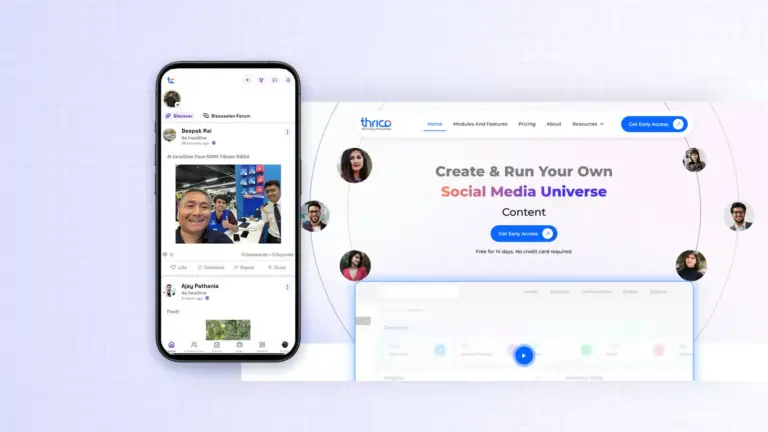
On Thrico, the community management platform built by PulsePlay Digital, mentorship, a career centre, jobs, giving, events and a member directory are distinct modules within one space. That matters here for an unglamorous reason: an institution running mentorship in one tool and events in another cannot see that the same alumnus is doing both.
Decision cue: The trigger is the engagement report showing a directory nobody logs into. That report usually prompts a data cleanup campaign, which treats the symptom. The same budget spent on giving alumni a reason to return updates the same records as a by-product.
FAQs
Alumni engagement is the participation of graduates in the institution’s activity and in each other’s, observed through what they do rather than what they are sent. It covers mentoring, hiring, attending, posting, volunteering and giving, and it is measured by repeated action over time.
Through returning participation rather than reach. Useful measures include repeat visits, alumni-initiated posts as a share of activity, mentorship pairs still active after three months, job board use from both sides, and attendance at small recurring formats rather than only flagship events.
A directory is a record of graduates held and published by the institution. A network is the active relationships between those graduates. A directory can exist with no network at all, which is the usual situation when login rates are low and records are out of date.
Because access is not a reason to visit. Portals typically offer a searchable directory and profile self-service, which serve the institution’s needs rather than the graduate’s. Without an exchange between alumni, there is no occasion to return between reunions and job searches.
Recurring reasons to return that do not depend on a calendar event. Mentorship, a jobs board, regional and interest groups, and small regular formats each give graduates something to do in months when nothing is being commemorated, which is when most networks go quiet.