Top Gamification Features That Boost Community Engagement (2026 Guide)
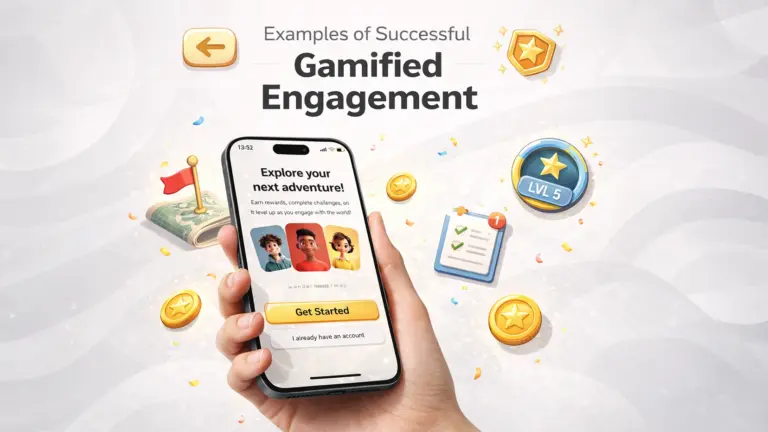
Building an engaged community is one of the biggest challenges for brands, platforms, and online groups today. Many communities struggle with low participation, inactive users, and declining retention over time. This is where gamification becomes a powerful solution. By integrating game-like elements such as rewards, competition, and progress tracking, communities can significantly boost user interaction. In this guide, you’ll learn the top gamification features for community engagement, how they work, and how to implement them effectively to drive long-term participation and growth.
Learn more about gamification in community engagement →
What Are the Top Gamification Features for Community Engagement?
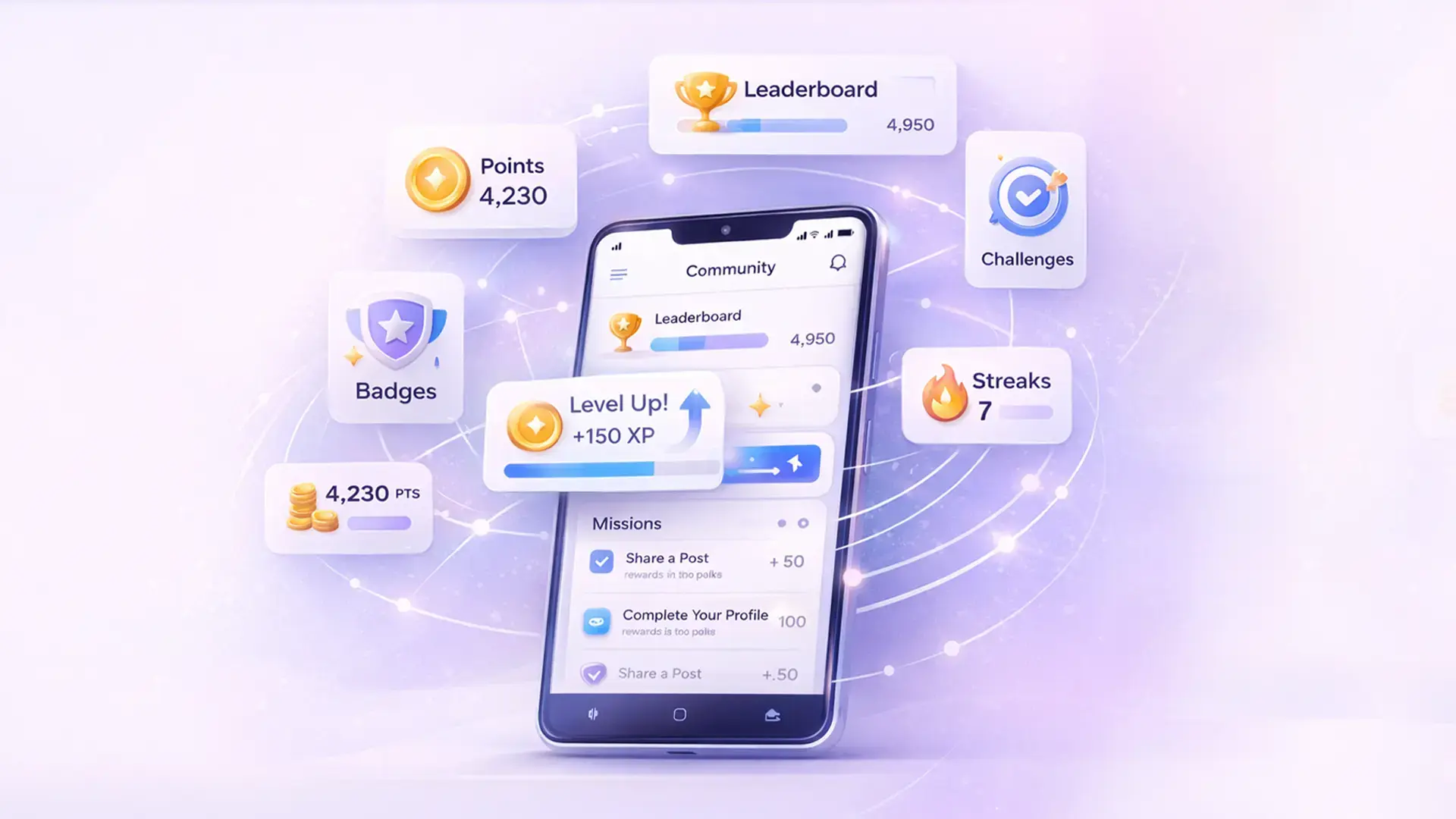
The top gamification features for community engagement include points, badges, leaderboards, challenges, and streaks. These elements motivate users to participate actively, reward contributions, and create a sense of progress and competition—ultimately improving retention and overall engagement.
What Is Gamification in Community Engagement?
Gamification in community engagement refers to the use of game-like elements—such as points, badges, challenges, and rewards—to encourage user participation and interaction within a community.
Instead of relying solely on intrinsic motivation, gamification taps into behavioral psychology. It leverages incentives, recognition, and progress tracking to influence user actions. When implemented correctly, gamification transforms passive users into active contributors by making participation more enjoyable and rewarding.
Top Gamification Features That Boost Community Engagement
1. Points & Reward System
Points are one of the most fundamental gamification features for community platforms. Users earn points for completing specific actions such as posting content, commenting, liking posts, or participating in discussions.
Points act as a “currency of effort,” giving users a measurable sense of achievement. This creates a powerful feedback loop: users perform actions → earn points → feel rewarded → repeat behavior.
A well-designed points system encourages consistent participation and helps track user contributions over time. It also lays the foundation for more advanced features like leaderboards and rewards.
2. Badges & Achievements
Badges are milestone-based rewards that users earn for reaching specific goals or accomplishments. These could include completing a certain number of posts, maintaining activity streaks, or contributing valuable content.
Badges serve as visual indicators of achievement and status within the community. They provide recognition and reinforce positive behavior.
More importantly, badges create emotional satisfaction. Users feel acknowledged and valued, which increases their likelihood of continued participation.
3. Leaderboards
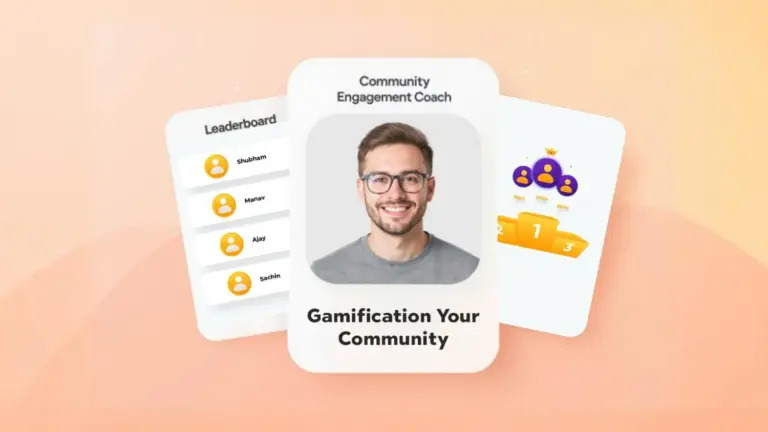
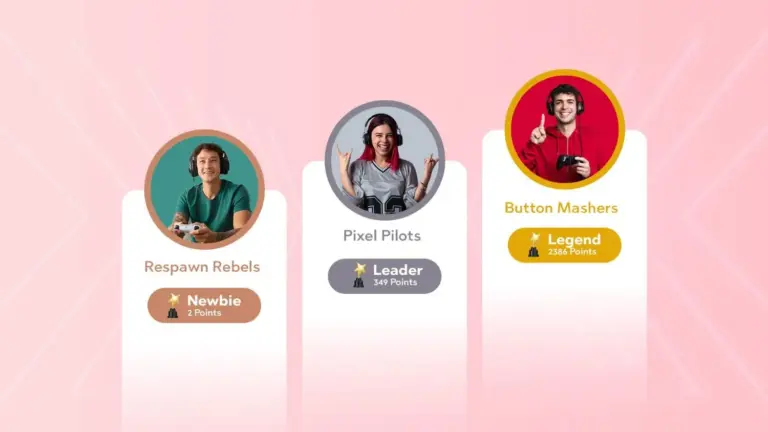
Leaderboards rank users based on their performance, activity, or points. They introduce a competitive element that motivates users to stay active and improve their standing.
Competition, when implemented correctly, can significantly boost engagement. Users are naturally driven to outperform others or maintain their position.
Leaderboards also enhance visibility. Top contributors receive recognition, which further encourages participation and builds community dynamics.
4. Challenges & Missions
Challenges and missions are time-based or goal-oriented tasks designed to encourage specific user actions. These can include weekly posting challenges, content creation tasks, or engagement campaigns.
These features are particularly effective for driving short-term engagement spikes. They give users a clear objective and deadline, creating urgency and excitement.
Challenges also help guide user behavior by directing attention to desired activities within the community.
5. Streaks & Progress Tracking
Streaks track consecutive days or sessions of user activity. For example, logging in daily, posting consistently, or completing tasks over multiple days.
This feature taps into habit formation psychology. Once users start building a streak, they are motivated to maintain it.
Breaking a streak often feels like losing progress, which encourages users to stay consistent. This makes streaks one of the most effective gamification features for improving retention.
6. Virtual Currency / Tokens
Virtual currency allows users to earn and spend tokens within the community ecosystem. These tokens can be redeemed for rewards such as exclusive content, perks, or recognition.
This creates an internal economy where users feel incentivized to participate more actively. The ability to “earn and redeem” adds depth to the engagement experience.
It also opens opportunities for monetization and premium experiences within the community.
7. Levels & Progression System
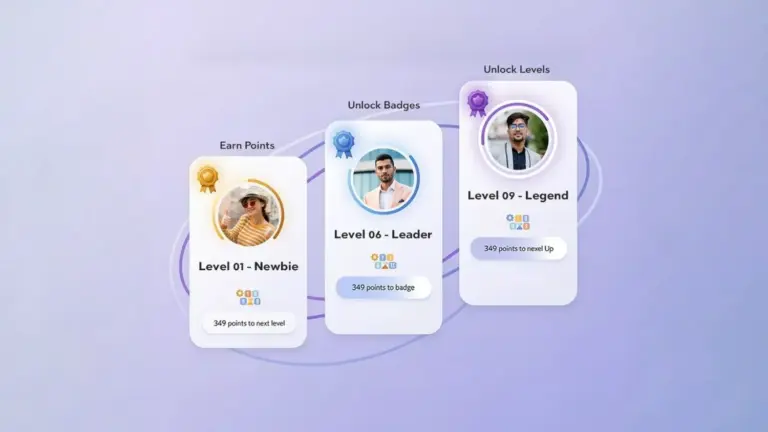
Levels represent a user’s journey within the community—from beginner to expert. As users earn points or complete actions, they progress through different levels.
Progression systems provide a long-term sense of achievement. Users are motivated to “level up” and unlock new benefits, privileges, or recognition.
This feature keeps users engaged over extended periods, as it offers continuous goals to work toward.
8. Team Competitions
Team-based gamification introduces collaboration alongside competition. Users are grouped into teams and compete against others to achieve shared goals.
This fosters a sense of belonging and community bonding. Instead of individual competition, users work together, which strengthens relationships and engagement.
Team competitions are especially effective for large communities where collaboration can drive collective participation.
Why Gamification Features Increase Engagement
Gamification works because it aligns with core human motivations and behavioral triggers.
● Reward Loop: Users are incentivized through rewards, reinforcing positive actions
● Social Recognition: Public acknowledgment increases user satisfaction
● Progress Tracking: Visible growth motivates continued participation
● Competition: Healthy rivalry encourages higher activity levels
By combining these elements, gamification creates an engaging environment where users feel motivated, recognized, and connected.
How to Implement Gamification Features in Your Community
Implementing gamification doesn’t require a complex system from the start. The key is to begin with simple features and scale gradually.
● Start with basic elements like points and badges
● Focus on rewarding meaningful contributions, not just activity
● Avoid over-gamification, which can overwhelm users
● Continuously analyze user behavior and optimize features
The goal is to enhance the user experience—not distract from it. Thoughtful implementation ensures long-term success.
Explore more gamification ideas for communities →
Common Gamification Mistakes That Reduce Engagement
While gamification can be powerful, poor implementation can have the opposite effect.
● Over-rewarding low-value actions: Encourages spammy or meaningless participation
● Ignoring user intent: Not aligning gamification with user goals reduces effectiveness
● Overly complex systems: Confusing mechanics discourage user engagement
Simplicity and relevance are critical. Gamification should feel natural and intuitive, not forced.
Examples of Gamification in Community Platforms
Many successful platforms use gamification to drive engagement:
● Thrico uses a points system to reward engagement
● Reddit uses a karma system to reward contributions
● Duolingo leverages streaks to encourage daily learning
● Online learning platforms use badges to recognize achievements
These examples highlight how gamification features can significantly improve user retention and participation when applied effectively.
Best Practices for Gamification Success
To maximize the impact of gamification, follow these best practices:
● Keep systems simple and easy to understand
● Focus on meaningful and high-quality user actions
● Use analytics to track performance and optimize features
● Regularly update challenges and rewards to maintain interest
Successful gamification evolves with the community and adapts to user behavior.
Build an Engaging Community with Gamification
Looking to boost engagement in your community platform?
Use gamification features like points, badges, leaderboards, and challenges to drive participation and retention. When implemented strategically, these features can transform your community into an active, thriving ecosystem.
Conclusion
Gamification is no longer optional—it’s a necessity for building engaging and sustainable communities in 2026. By incorporating features like points, badges, leaderboards, and challenges, you can motivate users, increase retention, and foster deeper connections.
The key lies in thoughtful implementation. Focus on user value, keep systems simple, and continuously optimize based on behavior. When done right, gamification becomes a powerful engine for long-term community growth.
FAQs
Gamification features are game-like elements such as points, badges, leaderboards, and challenges used to encourage user participation and engagement.
Gamification increases engagement by rewarding user actions, providing recognition, creating competition, and encouraging consistent behavior through progress tracking.
There is no single best feature. A combination of points, badges, leaderboards, and streaks typically delivers the best results.
Yes, gamification features are highly effective in increasing participation, improving retention, and building active communities.
Examples include Reddit’s karma system, Duolingo’s streaks, and badge systems in learning platforms.
Start with simple features like points and badges, focus on meaningful actions, avoid complexity, and continuously optimize based on user behavior.