Why Social Engagement Matters for Modern Businesses
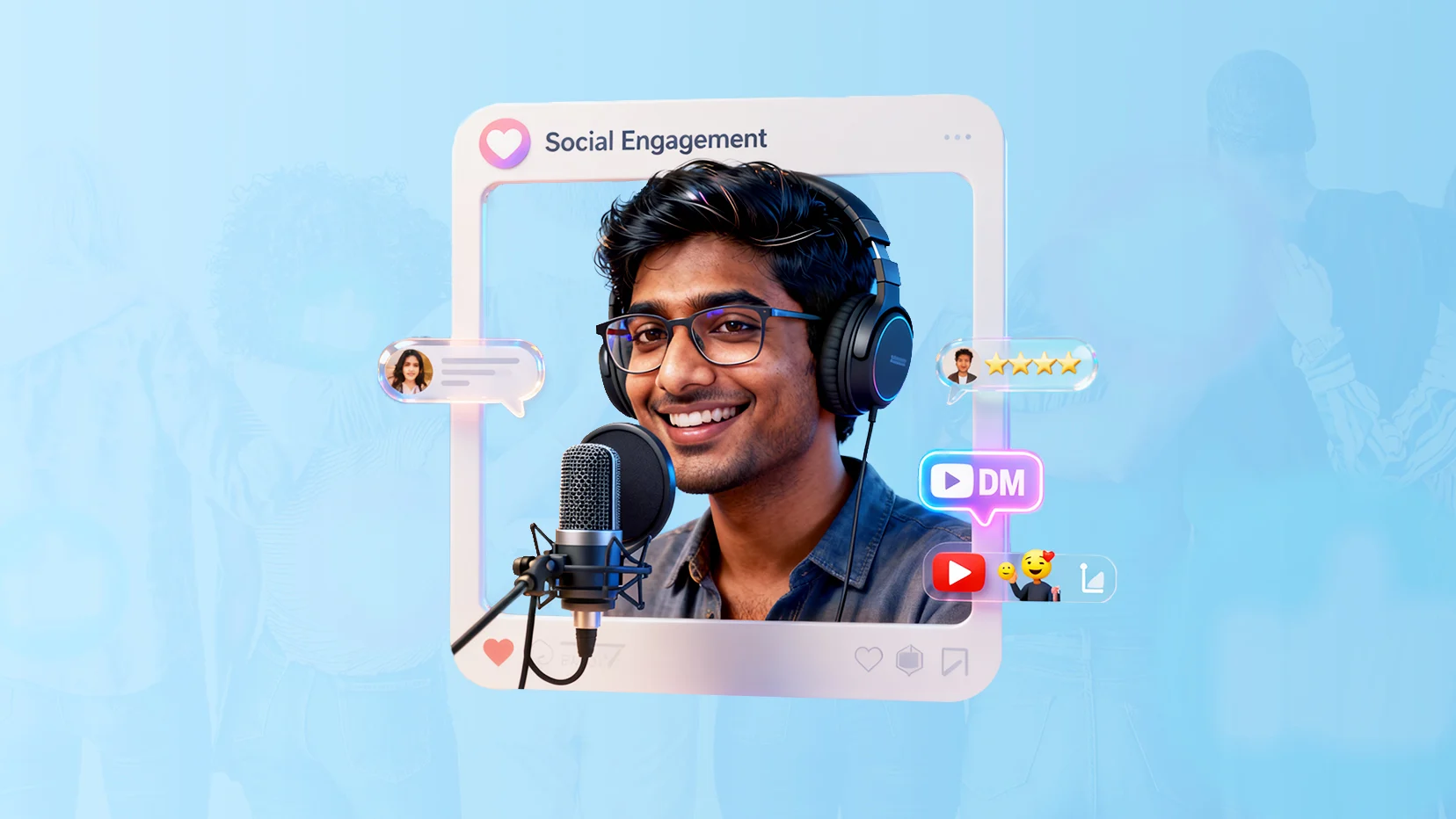
Social engagement refers to how customers interact with a brand across platforms like Instagram, Facebook, LinkedIn, X (Twitter), YouTube, and community spaces. It includes likes, comments, shares, mentions, reviews, replies, DMs, saves, and even watch time or post clicks. In plain terms, social engagement shows how actively and meaningfully people respond to your content and communication—not just whether they saw it, but whether they cared enough to interact.
But there’s a deeper layer. Social engagement is also about the relationship behind the interaction: Do customers feel heard? Do they trust your answers? Do they come back to your profile when they need help or inspiration? The richer and more consistent your engagement, the more your brand becomes a reliable part of a customer’s day-to-day decisions.
Why Social Engagement Matters for Modern Businesses (Core Explanation)
Modern buyers live in the stream. They scroll, search, compare, and decide—all without ever visiting a traditional website or filling out a form. That’s why business social strategy must treat social channels as front doors to your brand, not billboards on the highway.
● Customers spend more time on social platforms than on websites. When someone wants a quick answer—pricing, fit, availability, or social proof—they often ask via comments or DMs. If you’re absent or slow, the conversation (and the sale) moves on.
● Engagement shapes brand perception and trust. People don’t just judge your posts; they judge how you respond. A thoughtful reply in minutes signals care, competence, and credibility.
● Active engagement reveals preferences, needs, and obstacles. Every comment is data. When you aggregate questions, themes, and sentiment, you learn exactly what to fix, build, and promote.
● Social is a real-time feedback and service channel. It’s where praise becomes advocacy and issues become escalations. Brands that manage this well turn friction into loyalty.
In short, the importance of social engagement isn’t theoretical: it’s measurable across awareness, lead flow, conversion, service quality, and retention.
Key Benefits of Social Engagement for Businesses
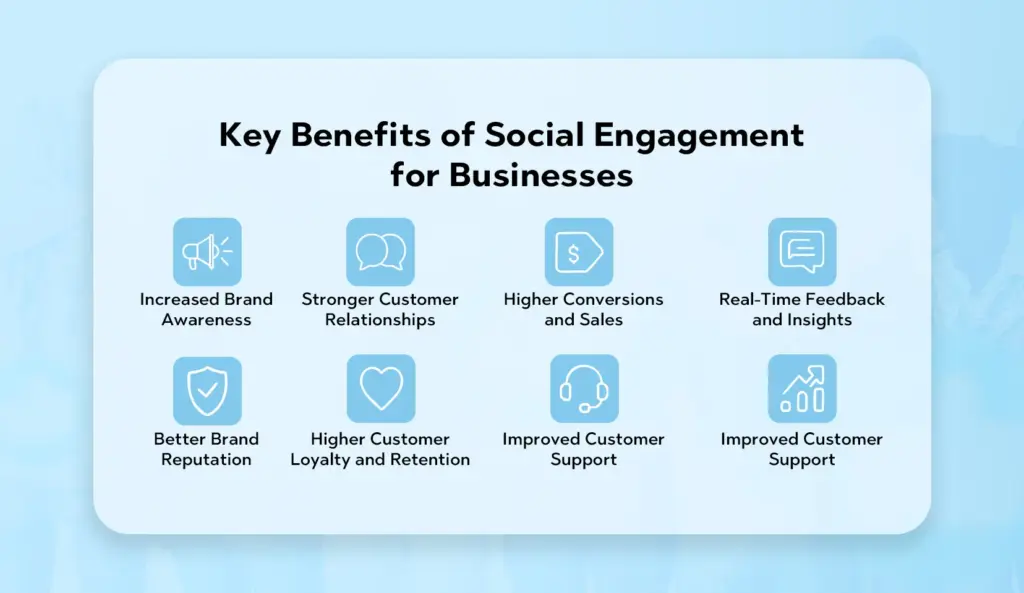
- Increased Brand Awareness
[High engagement signals relevance to platform algorithms, earning you more organic reach. Shares and stitches carry your message into new communities. Engagement is the engine of discoverability. - Stronger Customer Relationships
Two-way conversation makes your brand feel human and accessible. When customers see replies that are timely and empathetic, they feel understood—and that’s the foundation of loyalty. - Higher Conversions and Sales
Social interactions often occur at the moment of intent (“Is this available in my size?” “Will this integrate with X?”). Answer well and quickly, and you’ll accelerate purchase decisions. - Real-Time Feedback and Insights
Comments and DMs surface objections, feature requests, unboxing experiences, and friction points. You can route insights to product, CX, and sales to improve journeys and messaging. - Better Brand Reputation
Public, professional responses show you take responsibility and value customers. Handled well, even a complaint becomes social proof of your service standards. - Higher Customer Loyalty and Retention
Ongoing engagement—congrats on milestones, personalized tips, community shout-outs—keeps customers emotionally connected, reducing churn and increasing repeat purchases. - Improved Customer Support
A consolidated social inbox with clear SLAs allows support teams to meet customers where they are, cutting handle times and preventing public issues from escalating. - More Engagement-Driven Organic Reach
The more people interact, the more platforms amplify your content. That virtuous cycle reduces ad dependency and improves ROI on content production.
How Social Engagement Impacts Customer Behaviour
● Customers trust brands that respond quickly. Fast replies create a perception of reliability and care. Speed = respect for the customer’s time.
● High engagement humanizes your brand. Humor, gratitude, and real voices turn logos into people customers want to follow and buy from.
● Personalized communication influences buying decisions. Referencing prior interactions, products viewed, or local context makes replies feel tailored—and tailoring sells.
● Positive interactions increase repeat purchases. Recognition (replying by name, celebrating wins) and proactive help (tips, how-tos) nudge customers to return.
Takeaway: Behavior follows experience. When the experience feels responsive and personal, customers convert sooner and stay longer.
Use Cases of Social Engagement
- Answering Customer Queries via Comments or DMs
○ “Is this available in India?”
○ “Does it work with Shopify?”
○ “Can I book a demo this week?”
Turning these into quick, helpful answers drives conversions without leaving the platform.
- Handling Complaints Publicly—and Resolving Quickly
Acknowledge publicly, move to DM for details, fix the issue, then (if appropriate) summarize the resolution. You’ve just turned a potential PR risk into a trust-building moment. - Running Polls, Contests, and Interactive Campaigns
Polls and Q&As gather voice-of-customer data while boosting reach. Contests reward creativity and bring in user-generated content (UGC) that you can reshare. - Sharing Customer Testimonials and Stories
Spotlight real customers with short videos or carousel posts. Tag them (with permission) to increase authenticity and reach. - Monitoring Brand Mentions and Conversations
Respond to indirect mentions, competitor comparisons, and industry questions. Showing up in relevant threads signals expertise and earns followers. - Collaborating with Influencers and Partners
Co-create content, answer questions in live sessions, and track engagement through your CRM. Influencers open doors to new audiences; your responsiveness keeps them inside. - Community-Building & Advocacy Programs
Host AMAs, share behind-the-scenes, and reward top contributors. Communities reduce support burden and increase lifetime value.
Challenges in Managing Social Engagement
- High Message Volume
Launches, sales, and viral posts can flood your inbox. Without routing rules and automation, you’ll miss crucial opportunities. - Handling Negative Comments or Criticism
It’s not if but when. Teams need calm, consistent response playbooks to de-escalate and learn from feedback. - Maintaining Response Speed
Social is “always on.” Achieving sub-hour SLAs across time zones requires staffing plans or follow-the-sun coverage. - Ensuring Consistent Brand Voice
Multiple people replying across platforms can lead to tone drift. You need guidelines, templates, and coaching. - Managing Multiple Platforms at Once
Each platform has its own norms and UI. Consolidated inboxes, unified analytics, and clear ownership reduce chaos. - Measuring True Business Impact
Engagement is a means, not the goal. Connecting social interactions to leads, pipeline, CSAT, and retention is essential—and nontrivial.
Best Practices for Strong Social Engagement
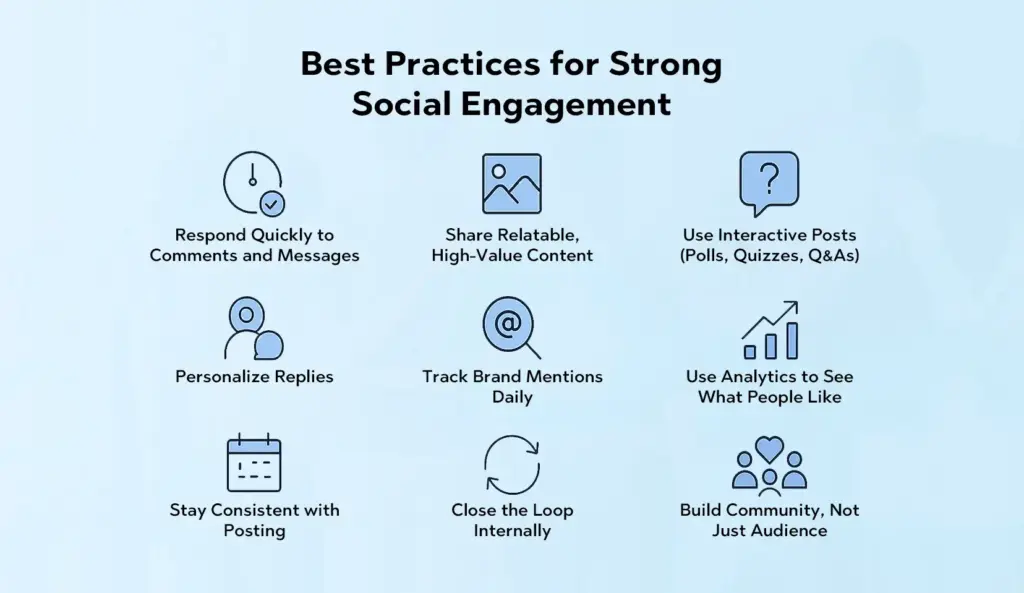
- Respond Quickly to Comments and Messages
Set SLAs (e.g., public replies within 1 hour, DMs within 30 minutes during business hours). Use auto-acknowledgements when volume spikes. - Share Relatable, High-Value Content
Teach, don’t just tell. Tutorials, teardown threads, and customer spotlights earn saves and shares, not just likes. - Use Interactive Posts (Polls, Quizzes, Q&As)
Engagement is a two-way street. Ask specific questions and act on the feedback. - Personalize Replies
Reference the customer’s name, locale, or prior thread. Link to the relevant product, doc, or video. Avoid canned one-liners. - Track Brand Mentions Daily
Monitor direct and indirect mentions, common misspellings, and comparison keywords. Jump into relevant conversations with value, not spam. - Use Analytics to See What People Like
Look beyond vanity metrics. Track save rate, comment quality, profile clicks, session depth after social visits, and conversion lag. - Stay Consistent with Posting
Consistency earns algorithmic trust and audience habit. Maintain a content cadence that customers can rely on. - Close the Loop Internally
Pipe recurring questions to product and CX. Publish content that proactively answers them (FAQs, demo clips, comparison guides). - Build Community, Not Just Audience
Encourage peer-to-peer help, highlight creators, and host recurring events. A thriving community compounds reach and retention.
Explore Thrico’s community-building tools to design programs that scale engagement and advocacy.
Tools & Technologies for Social Engagement Management
● Thrico Social Engagement Module — Built to operationalize social engagement with community features that help you build your community holistically..
● Hootsuite — Broad scheduling and monitoring with team workflows.
● Sprout Social — Robust social inbox, listening, and analytics for larger teams.
● Zoho Social — Cost-effective scheduling and monitoring with CRM adjacency.
● HubSpot Social Tools — Ties social activity to contacts, deals, and campaigns.
● Buffer — Simple publishing and analytics for lean teams.
These platforms typically help with:
● Scheduling content across platforms.
● Monitoring engagement and mentions in real time.
● Social inbox management with routing and collision avoidance.
● Analytics and reporting that connect engagement to outcomes.
When choosing, prioritize: bi-directional CRM sync, permissions and approvals, identity resolution (linking social handles to contacts), and reporting that shows influence on acquisition, support, and retention.
Playbooks, Frameworks & KPIs
To move from “posting more” to operational excellence, use the frameworks below.
1) The CARE Framework for Replies
● C — Clarify: Restate the question or issue to show you understand.
● A — Answer: Provide the direct solution or next step.
● R — Resource: Link to a guide, video, or help article for self-serve.
● E — Encourage: Invite further questions or feedback.
Example:
“Thanks, Aisha! Yes, it integrates with Shopify. Here’s the setup guide. If you’d like, DM us and we’ll walk you through it today.”
2) The ECHO Model for Content
● E — Educate: How-tos, best practices, ROI examples.
● C — Connect: Customer stories, behind-the-scenes, values.
● H — Help: Troubleshooting tips, FAQs, product updates.
● O — Open up: Polls, AMAs, live demos—co-create with your audience.
Balance posts across ECHO to keep feeds useful and human.
3) Crisis-to-Loyalty Playbook
- Acknowledge publicly within minutes: “We hear you and we’re investigating.”
- Move to DM for private details and resolution.
- Fix the root cause and update publicly if the issue was widespread.
- Close the loop with the customer: offer a make-good or follow-up.
Result: A potential reputation hit becomes proof of responsiveness.
4) Influencer/Creator Collaboration Flow
● Identify creators already mentioning your category.
● Engage authentically (comment, share, add value).
● Co-create content with a specific “job to be done” (tutorial, comparison, use case).
● Track engagement quality and downstream actions (site visits, demo requests) via UTM and CRM fields.
● Nurture long-term relationships, not one-off posts.
5) Funnel Alignment: Social → CRM → Revenue
● Top of Funnel: Hook with relatable pain points; optimize for saves and shares.
● Mid-Funnel: Answer objections; show proof (case studies, demos).
● Bottom of Funnel: Provide clear CTAs—DM for a quote, book a demo, or start a trial.
● Post-Purchase: Celebrate wins; invite feedback; encourage UGC.
Tie each stage to CRM properties and workflows so engagement becomes action, not just attention.
6) KPIs That Matter (Beyond Vanity)
● Response time (public & DM)
● Conversation resolution time
● Save rate (indicator of lasting value)
● Comment quality (questions vs. one-word replies)
● Profile click-through rate
● Social-sourced leads and assisted conversions
● Revenue influenced by social (multi-touch)
● CSAT from social support
● Community health (active members, UGC volume, repeat participation)
Create a weekly scorecard and review across marketing, CX, and sales to align priorities.
Micro Case Study
A D2C brand improved its Instagram response speed by 70% after adopting an integrated social CRM and standardizing reply templates. As engagement rose—particularly saves and meaningful comments—customers reported higher satisfaction, and organic sales grew by 35% in three months. The brand also reduced inbound tickets by proactively posting short tutorial reels that addressed recurring questions.
Final Thoughts & Next Steps
The brands that win on social aren’t necessarily the ones posting the most—they’re the ones engaging the best. Social engagement turns a scrolling audience into an active community, transforms real-time questions into revenue, and converts public feedback into product and service improvements. It’s the connective tissue between brand promise and customer experience.
If you’re looking to scale engagement with structure and speed—without losing the human touch—pair your content strategy with systems that make replies faster, insights clearer, and communities stronger.
Ready to elevate your business social strategy? Explore Thrico’s community-building tools to design engagement programs, automate smart workflows, and measure the impact from first comment to loyal customer.
FAQs
It’s the volume and quality of interactions—likes, comments, shares, mentions, reviews, and DMs—between your brand and its audience across social platforms, indicating how much people care about your content and communication.
Because today’s discovery, evaluation, and support happen in social feeds. Engagement builds trust, provides real-time insight into customer needs, and directly influences conversions and retention.
Timely, personalized replies make customers feel heard and supported. Over time, this creates emotional connection, advocacy, and repeat purchases.
High engagement boosts reach, reduces acquisition costs, increases conversion rates, and enhances loyalty—compounding revenue through both new and existing customers.
Greater visibility, stronger relationships, faster support, reputation management, real-time feedback loops, higher lifetime value, and more effective community building.
Respond quickly, post useful and relatable content, use interactive formats (polls, Q&As), personalize replies, monitor mentions, and analyze what drives saves, comments, and profile clicks.
Hootsuite, Sprout Social, Zoho Social, HubSpot Social Tools, Buffer, and the Thrico Social Engagement Module for CRM-connected monitoring, automation, and analytics.
High message volume, negative comments, response-time pressure, tone consistency across teams, multi-platform complexity, and proving impact on pipeline and retention.
Yes. Public, helpful responses and consistent follow-through show reliability and care—key drivers of trust and brand preference.
Social proof, fast answers at the moment of intent, and personalized recommendations reduce uncertainty and accelerate purchases.