
Building a Thriving Online Community from Scratch
Building a thriving online community starts with identifying a specific audience, choosing the right platform, creating valuable discussions, encouraging member participation, establishing clear community guidelines, and consistently engaging members. Successful communities grow through trust, meaningful conversations, and long-term value rather than rapid member acquisition.
What is an Online Community?
An online community is a digital space where people with shared interests, goals, or experiences interact, collaborate, and support one another. Unlike social media audiences, online communities encourage meaningful conversations and long-term relationships rather than one-way communication.
Definition
A group of individuals connected through a shared purpose, interacting via digital platforms.
How Online Communities Differ from Social Media Audiences
Social media audiences mainly consume content, while communities actively participate in discussions and contribute value.
Community vs Followers
Followers simply receive updates, whereas community members engage, share ideas, and build relationships.
Why Building an Online Community Matters
An engaged community helps businesses build trust, improve customer loyalty, generate user-generated content, collect valuable feedback, and drive sustainable organic growth.
| Audience | Community |
| Passive | Active |
| One-way communication | Two-way engagement |
| Followers | Members |
| Short-term attention | Long-term relationships |
Benefits of Building an Online Community
For Businesses
- Build trust and customer loyalty
- Reduce acquisition costs
- Increase referrals
For Creators
- Develop loyal fans
- Receive direct feedback
- Launch products successfully
For Startups
- Validate ideas
- Gain early adopters
- Improve product-market fit
For SaaS Companies
- Lower churn
- Improve onboarding
- Collect feature requests
For Coaches
- Strengthen client relationships
- Deliver ongoing support
- Increase retention
For Nonprofits
- Encourage volunteers
- Raise awareness
- Inspire advocacy
For Educational Platforms
- Enable peer learning
- Increase course completion
- Improve engagement
Types of Online Communities
- Interest-Based Communities: Built around hobbies or passions.
- Brand Communities: Centered on products or services.
- Learning Communities: Focused on education and skill development.
- Support Communities: Provide peer assistance.
- Gaming Communities: Connect gamers and creators.
- Professional Communities: Networking and career growth.
- Membership Communities: Exclusive paid groups.
- Local Communities: Geographic-based engagement.
How to Build a Thriving Online Community from Scratch
Step 1 – Define Your Community Purpose
Identify why your community exists. Whether it’s customer support, education, networking, or brand advocacy, a clear mission attracts the right members.
Step 2 – Identify Your Target Audience
Understand:
- Demographics
- Interests
- Pain points
- Motivations
Creating audience personas helps tailor discussions and content.
Step 3 – Choose the Right Platform
Step 3 – Choose the Right Platform
Selecting the right platform depends on your community’s goals, audience, preferred communication style, and scalability requirements. Consider factors such as ease of use, customization, moderation features, integrations, and monetization options before making a decision.
| Platform | Best For | Pros | Cons |
| Thrico | Branded online communities, businesses, creators, and organizations | Fully customizable, branded community experience, engagement tools, scalable, supports meaningful member interactions | May require setup and planning for customization |
| Facebook Groups | General audiences | Large user base, easy to join, familiar interface | Limited branding, algorithm-dependent visibility |
| Discord | Gaming, creators, and tech communities | Real-time communication, voice channels, highly engaging | Can be overwhelming for new users |
| Slack | Professional teams and workplace communities | Organized channels, excellent collaboration | Limited features on the free plan |
| Circle | Memberships and creator communities | Premium experience, built for paid communities | Subscription cos |
| Interest-based communities | Strong organic discovery and niche discussions | Limited brand control | |
| LinkedIn Groups | Professional networking and B2B | Access to professional audience | Lower engagement compared to dedicated community platforms |
| Small private groups | Simple and familiar messaging | Difficult to scale and organize conversation | |
| Telegram | Large communities and announcements | Supports large groups and broadcast channels | Less structured discussions |
| Mighty Network | Courses and membership businesses | Community, courses, and events in one platform | Paid subscription required |
If you’re building a branded, long-term community for your business, Thrico offers a dedicated platform designed to help organizations create engaging, customizable online communities while maintaining complete control over branding, member experience, and community growth.
Step 4 – Create Community Guidelines
Establish clear expectations covering:
- Respectful communication
- Spam policy
- Self-promotion rules
- Moderation process
- Privacy standards
Step 5 – Invite Your First Members
Start with:
- Existing customers
- Email subscribers
- Social media followers
- Referral programs
- Beta users
Step 6 – Publish Valuable Content
Keep conversations active through:
- Tutorials
- Polls
- Live sessions
- Ask Me Anything (AMA)
- Videos
- Weekly discussions
- Challenges
- User success stories
Step 7 – Encourage Member Participation
Boost engagement using:
- Recognition
- Badges
- Leaderboards
- Member spotlights
- Contests
- Polls
- Community events
Step 8 – Moderate the Community
Effective moderation includes:
- Removing spam
- Resolving conflicts
- Maintaining a positive culture
- Being transparent and fair
Best Community Engagement Strategies
- Weekly challenges
- Member of the Month
- Live Q&A sessions
- Polls
- Virtual events
- Discussion prompts
- Office hours
- Exclusive content
- Networking sessions
- AMAs
- Contests
- Recognition programs
- Expert interviews
- Feedback surveys
- Member introductions
Content Ideas for Community Managers
| Daily | Weekly | Monthly |
| Poll | Tutorial | Challenge |
| Question | Case Study | Contest |
| Tip | Quiz | Interview |
| Discussion | AMA | Member Spotlight |
Common Challenges and Solutions
| Problem | Solution |
| Low engagement | Ask questions and run polls |
| Spam | Active moderation |
| Inactive members | Personalized onboarding |
| Negative comments | Clear policies |
| No discussions | Weekly prompts |
| Toxic users | Enforce community guidelines |
Community Growth Strategies
Grow your community through:
- SEO
- Email marketing
- Social media
- Influencer partnerships
- Referral programs
- Webinars
- Podcasts
- Cross-promotions
- Events
- User-generated content
Metrics to Measure Community Success
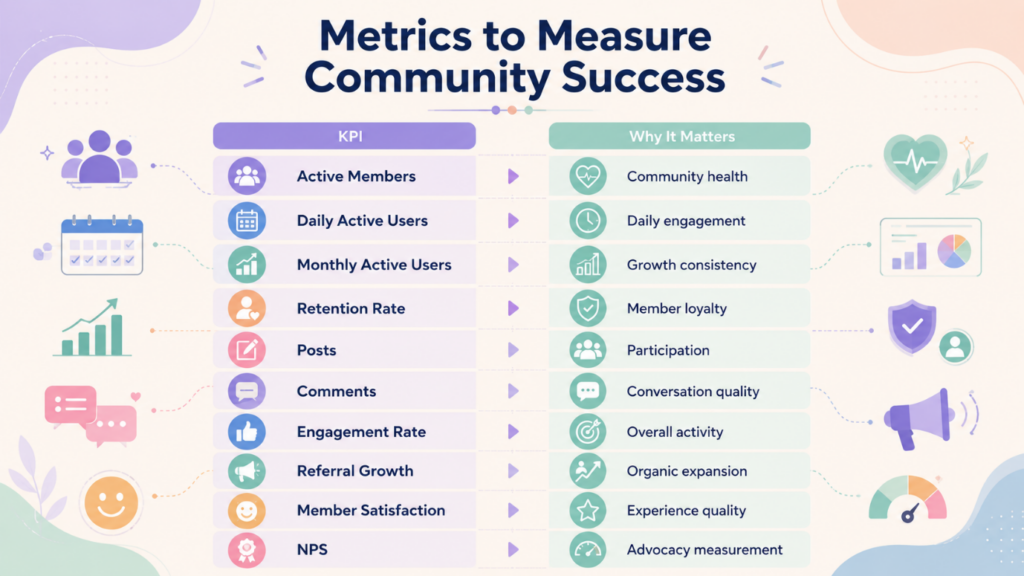
| KPI | Why It Matters |
| Active Members | Community health |
| Daily Active Users | Daily engagement |
| Monthly Active Users | Growth consistency |
| Retention Rate | Member loyalty |
| Posts | Participation |
| Comments | Conversation quality |
| Engagement Rate | Overall activity |
| Referral Growth | Organic expansion |
| Member Satisfaction | Experience quality |
| NPS | Advocacy measurement |
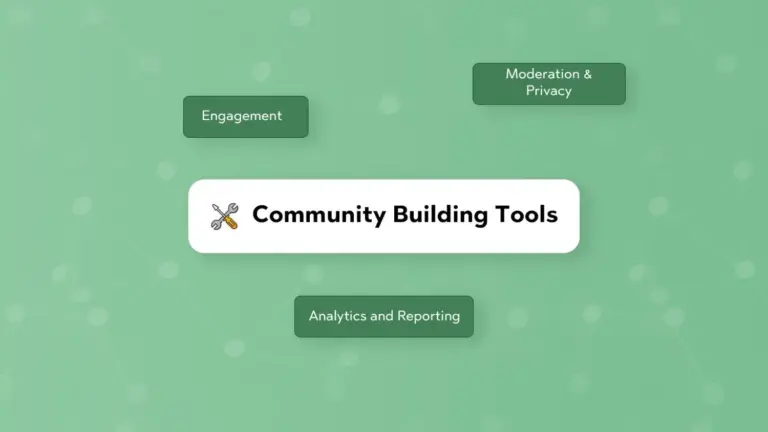
Best Tools for Community Management
| Tool | Purpose |
| Circle | Community platform |
| Discord | Real-time communication |
| Slack | Team collaboration |
| Notion | Knowledge base |
| Zapier | Automation |
| Typeform | Surveys |
| Google Analytics | Performance tracking |
| Buffer | Social scheduling |
| Canva | Content creation |
| Mailchimp | Email marketing |
How to Monetize an Online Community
Communities can generate revenue through:
- Membership subscriptions
- Online courses
- Virtual events
- Premium content
- Affiliate marketing
- Sponsored partnerships
- Digital products
- Coaching
- Paid newsletters
Common Mistakes to Avoid
- Growing too fast
- Ignoring members
- Excessive promotion
- Weak moderation
- Inconsistent posting
- Poor onboarding
- Ignoring analytics
- No engagement strategy
Future of Online Communities
The future includes AI-powered moderation, personalized member experiences, workflow automation, private communities, creator-led ecosystems, gamification, and, where relevant, emerging Web3 community models.
Expert Tips
- Start with a niche audience.
- Welcome every new member.
- Reward active contributors.
- Encourage user-generated content.
- Stay consistent.
- Measure engagement weekly.
- Listen to feedback.
- Focus on quality over quantity.
- Build trust before monetizing.
- Continuously evolve based on member needs.
Key Takeaways
- Define a clear community purpose.
- Understand your target audience.
- Choose the right platform.
- Create strong community guidelines.
- Publish valuable content consistently.
- Encourage active participation.
- Moderate fairly and transparently.
- Track engagement metrics.
- Grow through referrals and SEO.
- Build relationships before focusing on revenue.
Frequently Asked Questions
A digital space where people interact around shared interests, goals, or experiences.
Most communities take 6–12 months of consistent effort to become highly engaged.
Even 50–100 engaged members can create meaningful discussions.
Share valuable content, ask questions, recognize contributors, and host regular events.
Aim for daily interaction and several high-value posts each week.
Ignoring engagement, inconsistent posting, weak moderation, and focusing only on growth.
Yes, through memberships, courses, coaching, premium content, sponsorships, and digital products.
Apply community guidelines consistently, communicate clearly, and remove repeat offenders when necessary.
Active users, retention, engagement rate, comments, posts, referrals, satisfaction, and NPS.
Run contests, feature member stories, ask for feedback, and reward valuable contributions.
A clear purpose, active participation, valuable content, strong moderation, and consistent engagement.
Deliver ongoing value, encourage relationships, recognize contributions, and respond promptly.
AI assists with moderation, content recommendations, analytics, automation, and personalized member experiences.