
Why Thrico Is the Best White-Label Community Platform for Enterprises
What Enterprises Need From a White-Label Community Platform
1. Full brand ownership
Enterprises don’t want a skin on top of someone else’s product; they want a space that feels like their own. White-label software should put your identity front and center—logos, typography, color systems, navigation patterns, and even your domain and email branding—to maintain trust and consistency everywhere the member interacts.
2. Scalability and performance
As programs mature, audiences expand across regions, lines of business, and use cases. The platform must handle sustained activity—discussions, content, chat, and events—without degrading responsiveness, and it should support modular growth so teams can add capabilities while keeping the experience coherent.
3. Security and compliance
Enterprise requirements demand control over data and access: granular roles, audit trails, consent management, and governance that meet regional privacy expectations. This isn’t optional; it’s foundational to long-term community health and executive confidence.
4. Integration readiness
Communities become most valuable when they plug into the systems you already use—CRM, marketing automation, learning, payments, SSO—so that identity, personalization, and reporting flow cleanly across the stack.
Complete White-Label Customization With Thrico
1. Custom domain and branding
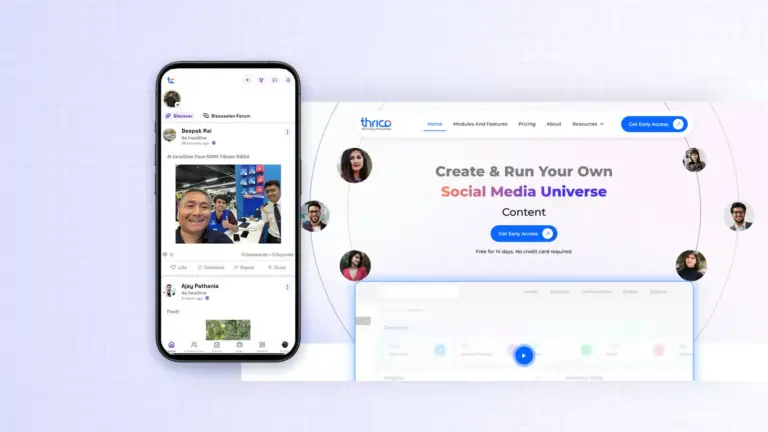
Thrico’s approach to white-labeling centers on brand integrity. You bring your domain and identity assets; the platform ensures those choices show up consistently across UI elements, components, and communications, so the environment looks and feels like an owned property rather than a third-party network.
2. UI/UX flexibility
Beyond colors and logos, enterprises need navigation and layout control to map their content strategy—spaces, collections, and surface areas aligned with how their audience learns, collaborates, and takes action. Thrico emphasizes flexible layouts and component-level controls that keep the experience on-brand while letting product and program teams iterate quickly.
3. Brand-consistent member experience
From first click to daily habit loops, consistency reduces cognitive load. Thrico ties theming to the practical touchpoints members see—cards, badges, buttons, profile surfaces, and email white-labeling—so every interaction reinforces who you are and why the community exists.
Enterprise-Grade Scalability and Performance
1. High-traffic handling
Communities thrive when conversation, content, and events compound. The underlying model in Thrico brings together profiles, forums, groups, and real-time chat—designed to support long-form knowledge, quick coordination, and programmatic events at scale, without forcing teams to juggle separate systems.
2. Global user access
Enterprises often run regional programs, alumni hubs, partner networks, and customer communities simultaneously. Thrico’s focus on cohesive web and mobile experiences ensures members can participate wherever they are, with responsive interfaces and familiar patterns that travel across devices.
3. Modular architecture
As needs evolve, teams can introduce new modules (e.g., events, learning flows, or enhanced moderation) and reorganize information architecture—spaces, tags, collections—while keeping the brand layer intact. That modularity is key to sustainable scale.
Advanced Security, Privacy, and Access Control
1. Role-based permissions
Enterprise governance requires well-defined roles—admins, moderators, editors, contributors, champions—each with clear creation and publishing rights. Thrico highlights granular admin roles and auditability, letting teams set boundaries that match internal policies and external expectations.
2. Moderation tools
Healthy conversation doesn’t happen by luck. Thrico pairs structured forums and group chats with moderation features like reporting, muting, and filters, helping teams protect discourse quality while empowering trusted champions to participate in stewardship.
3. Data protection and compliance readiness
Controlling where data lives and who can access it is non-negotiable at the enterprise level. The white-label approach described by Thrico prioritizes governance—consent management, export options, and role-based oversight—so your brand can meet evolving privacy standards.
Engagement-Focused Community Features
1. Discussions, chat, and events
Thrico combines topic-based forums (for durable knowledge, accepted answers, and best practices) with real-time group chats for fast coordination. Program teams can then anchor momentum with a calendar of webinars, office hours, and cohort sessions—each feeding a content library members can return to later.
2. Gamification and rewards
Power users and everyday contributors both respond to recognition. Thrico’s philosophy emphasizes points, badges, and leaderboards as repeatable nudges that turn participation into habit—helpful for activation, retention, and surfacing trustworthy voices in crowded spaces.
3. Content and knowledge sharing
A native CMS streamlines publishing—posts, articles, announcements, and updates—organized by categories, tags, and collections. Editorial workflows like scheduling and role-based publishing help large teams keep a consistent cadence without bouncing between tools.
Built-In Analytics and Actionable Insights
1. Engagement tracking
Measuring what matters is essential for executive buy-in. Thrico encourages tracking user activation, response times, content contribution distribution, event attendance and replays, and cohort retention—practical indicators of whether programs are working.
2. Member behavior analysis
Understanding which spaces, formats, and topics resonate—then iterating your programming accordingly—turns community management into a product practice. Thrico’s guidance stresses reviewing dashboards regularly and adjusting prompts, office hours, and champion programs to improve outcomes.
3. Community performance metrics
Use activation rate, 30/60/90-day retention, and advocacy signals (UGC, referrals, case studies) to quantify momentum and guide investment. Treat these as north-star metrics for programs like onboarding cohorts, expert AMAs, and progressive challenges.
Seamless Integrations With Enterprise Tech Stacks
1. CRM, marketing, and support tools
A modern community platform should connect to CRM and automation systems so member activity can inform lifecycle journeys and reporting. Thrico calls out alignment with CRM and email tools, plus SSO options for a frictionless, secure experience.
2. APIs and automation workflows
Enterprises often need exports, data pipelines, and automation to move insights into executive dashboards. Thrico’s selection criteria include API access and analytics export so teams can extend the platform with their own workflows and governance standards.
Multi-Use Case Support for Enterprises
1. Customer success communities
SaaS and product-led organizations can centralize knowledge, capture durable answers in forums, and host events that accelerate onboarding and adoption—tying engagement to measurable retention.
2. Partner ecosystems
Partners benefit from shared spaces, structured knowledge, and announcements that live right next to discussion and chat. With role-based access, vendors can offer enablement content while protecting sensitive areas.
3. Internal employee communities
Enterprises use white-label platforms to foster knowledge-sharing and collaboration within the organization, creating searchable documentation and peer networks that survive org changes and time zones.
Faster Deployment and Lower Total Cost of Ownership
1. Quick setup and onboarding
Thrico positions white-labeling as a way to launch quickly—configuring identity, spaces, roles, and content flows without heavy engineering. The result is faster time-to-value with a clear, iterative rollout path anchored in early cohorts and programming rhythms.
2. Reduced development and maintenance costs
Instead of building a community layer from scratch, teams rely on Thrico’s modules for profiles, discussions, CMS, events, gamification, and analytics—reducing integration overhead and ongoing maintenance while preserving brand control.
Long-Term Strategic Value for Enterprises
1. Improved retention and loyalty
By owning the relationship (rather than renting it from third-party networks) and by designing on-brand experiences, enterprises can cultivate durable member habits that translate into loyalty and lifetime value.
2. Stronger brand advocacy
Communities create space for collaboration and co-creation—beta groups, feedback loops, and UGC—that convert engaged members into champions and references over time.
3. Sustainable community growth
With the right analytics, cadence, and integration to the business stack, programs become repeatable and scalable. Thrico outlines a phased playbook—strategy, architecture, launch, iteration, monetization—to keep growth sustainable and measurable.
Conclusion
Recap why Thrico stands out
Thrico brings the pillars enterprises expect in a white-label community platform: deep brand customization (domain, theme, components), robust engagement modalities (forums, chat, events, CMS, gamification), analytics that track real outcomes, and integrations and SSO that tie the community to the broader tech stack. Governance—roles, audits, moderation—sits alongside, so security and privacy remain first-class.
Why enterprises prefer white-label community platforms
When your brand controls the experience and data, you can build consistent journeys, comply with policies, and compound value across regions and programs. Thrico’s guidance and feature approach show how a branded community becomes a durable growth engine rather than another isolated channel. For a deeper tour of modules that power this, explore Thrico’s community building tools.
FAQ
It’s branded community software you re-theme to your logo, colors, domain, and tone so the space appears fully yours—while delivering core capabilities like profiles, forums, groups, events, messaging, and analytics without building infrastructure yourself.
They provide ownership of brand and data, consistent UX, governance controls, and measurable engagement that public social networks can’t promise—making them better for long-term relationships and retention.
By unifying discussion forums, group chats, CMS, events, and gamification in a modular architecture that teams can expand as programs grow—across web and mobile experiences.
Yes. Expect custom domain and email white-labeling, theme controls (colors, type), navigation flexibility, and component-level design so the UI reflects your brand system end-to-end.
Granular admin roles, governance-minded controls, and moderation tooling—reporting, muting, and filters—support policy-aligned access, safe conversations, and auditable operations.
Selection guidance emphasizes integrations with CRM and email, plus SSO (SAML, OAuth, OpenID Connect). Analytics exports and APIs enable data pipelines for reporting and automation.
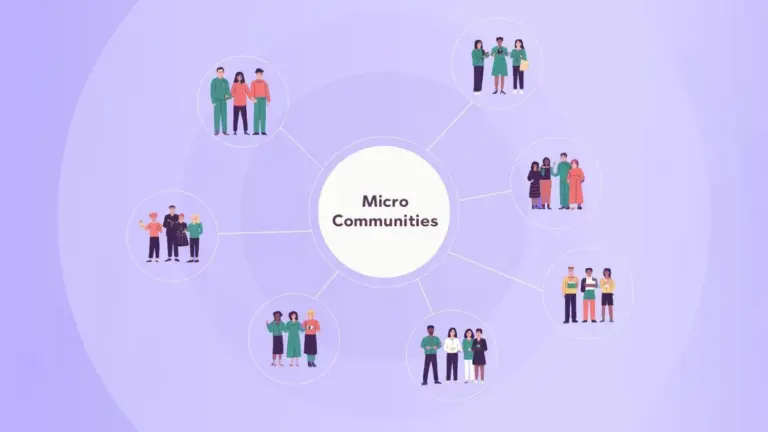
The modular approach to spaces, groups, directories, and role structures allows enterprises to run distinct programs (customers, partners, or internal cohorts) within a cohesive, brand-consistent environment.
Yes—its focus on cohesive web and mobile experiences, plus configurable information architecture and roles, supports regionalized programming and distributed teams.
Through identity-rich profiles and directories, forums for durable knowledge, real-time chat for coordination, events for rhythm, and gamification for recognition—anchored by analytics that guide iteration.
Because it’s built for brand consistency, governance, and measurable engagement—letting enterprises own the relationship and compound value with integrated tooling instead of scattering efforts across disjointed apps. For more on modules, see Community building tools.